
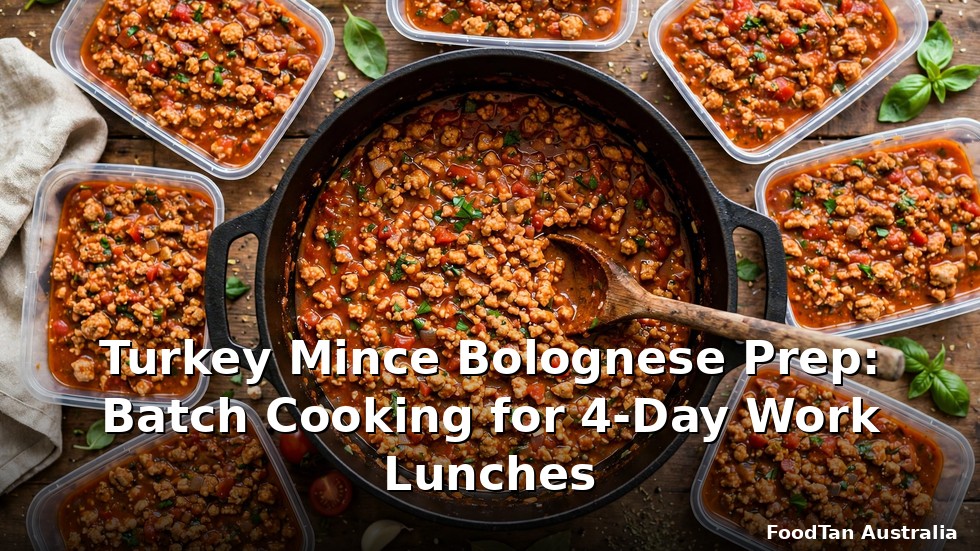
Turkey Mince Bolognese Prep: Batch Cooking for 4-Day Work Lunches
There’s a reason bolognese is the first thing everyone learns to batch cook: it’s forgiving, it’s cheap, it reheats like a dream, and nobody has ever been sad to find it in their lunchbox. This turkey mince bolognese prep takes the classic weeknight sauce, lightens it up with lean turkey mince, and turns one pot into four days of proper work lunches — plus a couple of bonus dinners if you scale it up.
Turkey mince doesn’t get the love it deserves in Australia. It sits in the meat aisle, usually priced competitively with beef mince (often a dollar or two cheaper per kilo on special), it’s leaner, and in a well-seasoned bolognese you’d be hard-pressed to pick it in a blind taste test. The sauce does the talking; the mince just brings the protein.
Below is the full system: the recipe, the batch method, the four-day lunch plan, and the numbers. One pot, about 45 minutes, lunches sorted until Friday.
Key Takeaways
- Turkey mince is a smart bolognese swap. Leaner than beef mince, often cheaper on special, and indistinguishable in a well-seasoned sauce.
- Brown it properly. Turkey mince needs real browning — not grey steaming — for deep flavour. Hot pan, don’t crowd, leave it alone.
- One batch = 4 lunches + 2 dinners. Scale the recipe below and the freezer gets a look-in too.
- Vary the base across the week. Same sauce over spaghetti, then penne, then on toast, then in wraps — four different lunches, one pot of sauce.
- It freezes for months. Bolognese is one of the all-time great freezer sauces. Portion flat in bags for maximum freezer efficiency.
Why Turkey Mince Deserves a Spot in Your Rotation
Let’s be honest about why most of us default to beef mince: habit. We grew up on it, our mums used it, the recipes all call for it. But turkey mince has a genuine case, especially for meal prep.
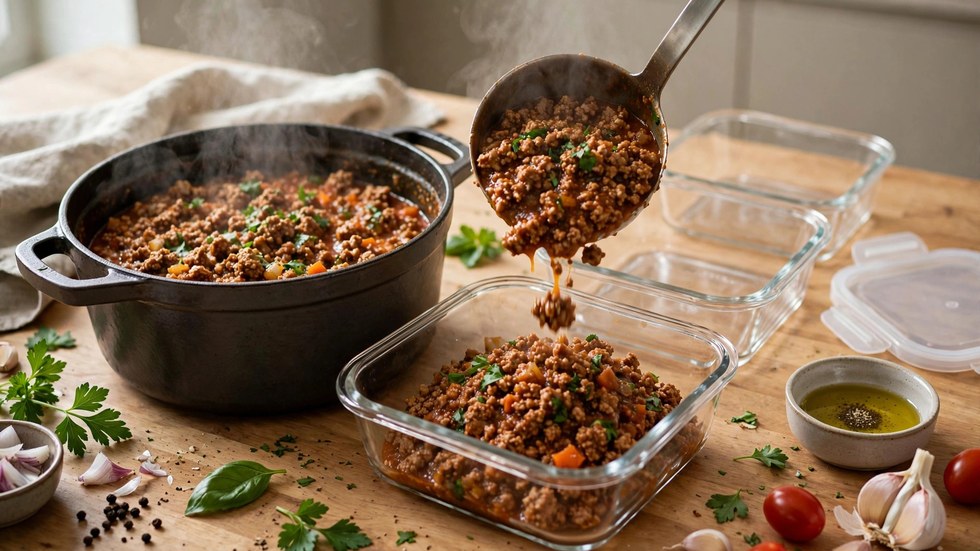
First, the leanness. Turkey mince is typically much leaner than regular beef mince, which means less fat to drain off and a sauce that doesn’t leave an oil slick. For work lunches — food you’re eating at a desk, reheated — leaner is genuinely nicer. Nobody wants to microwave a container and find it swimming.
Second, the price. Turkey mince in Australian supermarkets usually sits around $10–$13 per kilo (estimates — it moves with specials and store). Regular beef mince is often in the same range or higher. When turkey mince goes on special, it can drop significantly, and that’s the moment to buy double and freeze half. The value proposition is strong: lean protein at a price that competes with the fattiest beef mince.
Third, the flavour question. Plain turkey mince is milder than beef — less inherently “meaty”. In a bolognese, that’s irrelevant, because bolognese flavour comes from the soffritto, the tomatoes, the wine or stock, the herbs, and the long simmer. The mince is a protein delivery vehicle. Season the sauce properly and nobody — including you — will be thinking about which animal it came from by the second bite.
What to look for at the shops
Turkey mince comes in different fat percentages. For bolognese, a standard mince (not the extra-lean breast mince, which can go dry and is pricier) is the sweet spot — enough fat to brown nicely and stay juicy, lean enough to skip the draining step. Check the use-by date and buy the freshest pack; mince is the one meat where freshness genuinely matters. If it’s marked down with a yellow sticker and you’re cooking it tonight, that’s a legitimate bargain — just cook or freeze it the same day.
Turkey Mince Bolognese Prep: The 4-Day Lunch System
The recipe below makes 8 generous serves — four work lunches plus dinners, or a full week of lunches for one with leftovers. Active time is about 20 minutes; the pot simmers away for 30–40 while you do something else.
The recipe (8 serves)
Ingredients:
- 1kg turkey mince
- 2 brown onions, finely diced
- 2 carrots, finely diced
- 2 celery stalks, finely diced
- 4 garlic cloves, minced
- 2 x 400g tins chopped tomatoes
- 3 tablespoons tomato paste
- 500ml chicken or vegetable stock
- 1 teaspoon dried oregano
- 1 teaspoon dried basil (or a handful of fresh at the end)
- 1 bay leaf
- 1 teaspoon sugar (tames the tomato acidity)
- Salt and cracked pepper
- Olive oil
- Optional: a splash of red wine, a pinch of chilli flakes, a parmesan rind tossed in while simmering
Method:
- Brown the mince in batches. This is the step that separates good bolognese from grey, sad bolognese. Heat a large heavy pot over high heat with a little oil. Add a third of the mince, spread it out, and leave it alone for 3–4 minutes until deeply browned underneath. Break it up, cook through, remove to a bowl. Repeat with the remaining mince. Don’t crowd the pan — steamed mince never browns.
- Build the soffritto. Same pot, medium heat, a little more oil. Onion, carrot, celery with a pinch of salt. Cook 8–10 minutes until soft and sweet. This vegetable base is where the deep flavour lives — don’t rush it.
- Add garlic and tomato paste. Stir for 2 minutes until the paste darkens slightly. This caramelisation step adds richness you can’t get any other way.
- Everything back in. Return the mince to the pot. Add tinned tomatoes, stock, oregano, basil, bay leaf, sugar, and the optional wine or parmesan rind. Stir well, scraping up any browned bits from the bottom — that’s pure flavour.
- Simmer low and slow. 30–40 minutes, lid ajar, stirring occasionally. You’re looking for thick, rich, and glossy — the sauce should mound on a spoon, not run off it. Turkey mince releases less fat than beef, so you shouldn’t need to skim.
- Finish and season. Fish out the bay leaf and parmesan rind. Taste — then salt properly. Under-seasoned bolognese is the most common home-cook mistake. A knob of butter stirred through at the end adds silkiness (optional but lovely).
The four-day lunch plan
Same sauce, four different lunches. This is the anti-boredom strategy:
- Monday: Classic spaghetti. The traditionalist’s lunch. Twirl it properly — desk dining deserves standards.
- Tuesday: Penne bake. Toss with penne, top with cheese, grill until bubbly. Assemble the night before and bake at lunch if you have an oven, or microwave at work.
- Wednesday: Bolognese toastie or jaffle. Thick sauce on sourdough with mozzarella in the sandwich press. Arguably the best day of the four.
- Thursday: Wrap or burrito bowl. Sauce in a large wrap with slaw and cheese, or over rice with corn and avocado as a burrito bowl.
Cook your pasta fresh each morning if you can — it takes ten minutes and the texture is miles better than four-day-old reheated spaghetti. If mornings are chaos, cook it the night before and toss with a little olive oil so it doesn’t clump.
Batch, Portion and Freeze
Eight serves is more than four lunches if you’re also eating it for dinner — which you will be, because a pot of bolognese in the house has gravitational pull. Here’s the portioning strategy:
- Four lunch containers with sauce only (add the pasta/bread/wrap base fresh or the night before).
- Two dinner portions for the fridge — eat within 3–4 days.
- Two freezer portions in flat freezer bags, labelled with the date. Future easy dinners, sorted.
Cool the sauce before portioning — spread it in a wide tray if you’re in a hurry, or just let the pot sit until it stops steaming, then divide it up. Refrigerate within a couple of hours of cooking (faster in summer). Frozen bolognese keeps well for a few months for best quality; thaw overnight in the fridge.
Freezer bag technique
Ladle cooled sauce into heavy-duty freezer bags, squeeze out the air, seal, and lay flat on a tray to freeze. Once solid, the flat bags stack like files and thaw faster than a solid tub. Write the contents and date on the bag with a marker before filling — writing on a full, floppy bag of sauce is a fool’s errand.
The Cost Breakdown
Here’s the full batch costed out at typical Australian supermarket prices (estimates — specials will beat these):
| Ingredient | Amount | Est. price (AUD) |
|---|---|---|
| Turkey mince | 1kg | $11.00 |
| Brown onions | 2 | $1.00 |
| Carrots | 2 | $0.60 |
| Celery | 2 stalks | $0.80 |
| Garlic | 4 cloves | $0.40 |
| Tinned tomatoes | 2 x 400g | $2.00 |
| Tomato paste | 3 tbsp | $0.50 |
| Stock | 500ml | $1.00 |
| Herbs, sugar, oil, seasoning | Pantry | $1.00 |
| Sauce total (8 serves) | $18.30 | |
| Per serve (sauce) | $2.29 | |
| Pasta/bread per lunch | 1 serve | $0.50 |
| Complete lunch per day | ~$2.80 |
Under three dollars for a proper, protein-rich lunch. Even if you add cheese, a side salad, or fancy sourdough, you’re miles under the cost of buying lunch. The sauce also scales beautifully — double everything for a 16-serve mega batch that stocks the freezer for a month. The cooking time barely changes.
Cost out your own batch size with the calculator:
Australian Meal Prep & Macro Estimator
Pop in your costs in $ AUD and get per-portion cost, macros and storage guidance.
Troubleshooting Turkey Mince
Turkey mince has a couple of quirks worth knowing:
- It’s paler than beef — don’t wait for “brown” the way you would with beef. Turkey browns, but it won’t go as dark. Judge doneness by texture and by the fond (browned bits) on the bottom of the pan, not by colour alone.
- It can stick more. Make sure the pan is properly hot and oiled before the mince goes in, and resist the urge to stir for the first few minutes. Let the crust form, then break it up.
- Dryness happens when it’s overcooked. Lean mince dries out faster than fatty beef mince. The long simmer in sauce protects it — this is why bolognese is the ideal use case, much more forgiving than turkey rissoles or meatballs.
- Season assertively. Because the meat itself is mild, the seasoning carries the dish. Taste at the end and adjust salt, and don’t be shy with the herbs and garlic.
- Watery sauce? You didn’t simmer long enough, or the lid was on too tight. Lid ajar, low heat, patience. The sauce should be thick enough to sit on top of pasta, not pool around it.
Beyond Bolognese: What Else the Batch Method Teaches You
Once you’ve got the brown-sear-simmer rhythm down, it transfers to almost every mince-based batch dish: chilli con carne, cottage pie filling, lasagne sauce, stuffed capsicums, taco mince. The technique is identical — only the spices change. Turkey mince works in all of them, and the cost-per-serve maths stays just as friendly.
The four-day lunch system works because it’s structured but not rigid. Same reliable sauce, different vehicle each day, zero decision fatigue at 7am. Cook the pot on Sunday, and the working week basically feeds itself.

You May Also Like

Sheet Pan Chicken Thighs Meal Prep: Cheap Sweet Potato Trays for the Week

10 Cheap High Protein Lunch Bowls Australia Under $3.50 AUD Per Portion