
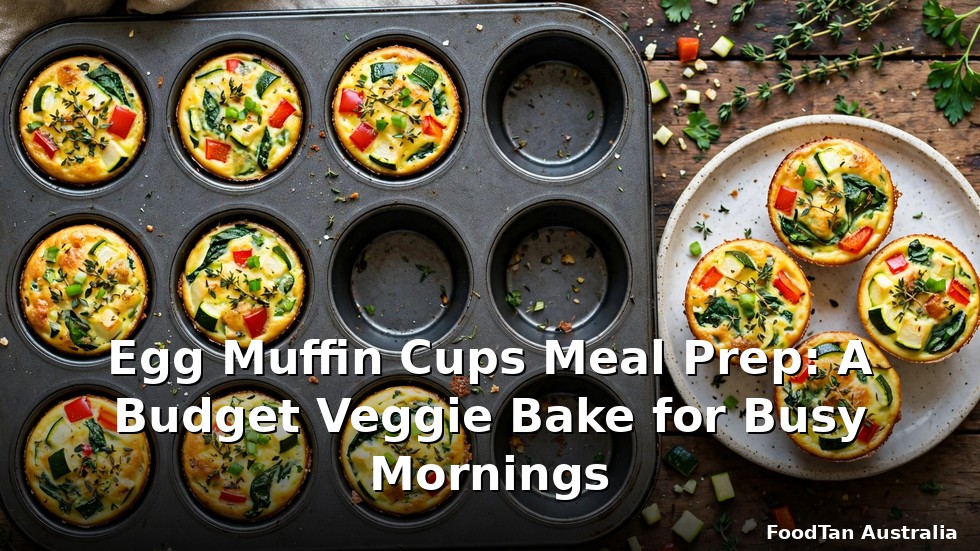
Egg Muffin Cups Meal Prep: A Budget Veggie Bake for Busy Mornings
Mornings are the enemy of good intentions. The alarm goes off, you’re already behind, and the choice is between a proper breakfast and getting out the door on time. Egg muffin cups solve this completely: they’re little baked omelettes made in a muffin tin, they cost cents each, and they turn the whole week’s brekkie into a grab-and-reheat situation. This egg muffin cups meal prep makes twelve in about half an hour, and they’re genuinely good — not “good for meal prep”, just good.
Eggs are one of the last true budget proteins in Australia. Even with prices doing what they’ve been doing, a dozen eggs still works out to a fraction of the cost per serve of almost any other breakfast — and each cup packs real protein that keeps you going until smoko. Add whatever veg is languishing in the crisper and you’ve got a zero-waste brekkie system too.
One batch, one muffin tin, twelve cups. Here’s the whole playbook.
Key Takeaways
- 12 eggs + 1 muffin tin = a week of brekkie. About 30 minutes total, most of it hands-off oven time.
- Grease the tin properly. Egg sticks to muffin tins with supernatural determination. Oil, butter, or silicone liners — don’t skip this.
- Pre-cook watery veg. Mushrooms, zucchini and spinach release water that makes cups soggy. A quick sauté first fixes it.
- Underfill slightly. Fill cups three-quarters full — eggs puff up dramatically in the oven, then settle.
- Fridge 3–4 days, freezer longer. Refrigerate what you’ll eat this week; freeze the rest for grab-and-go future mornings.
Why Egg Cups Beat Every Other Prepped Breakfast
Overnight oats are fine. Smoothie packs are fine. But egg muffin cups have three advantages that make them the best prepped brekkie going:
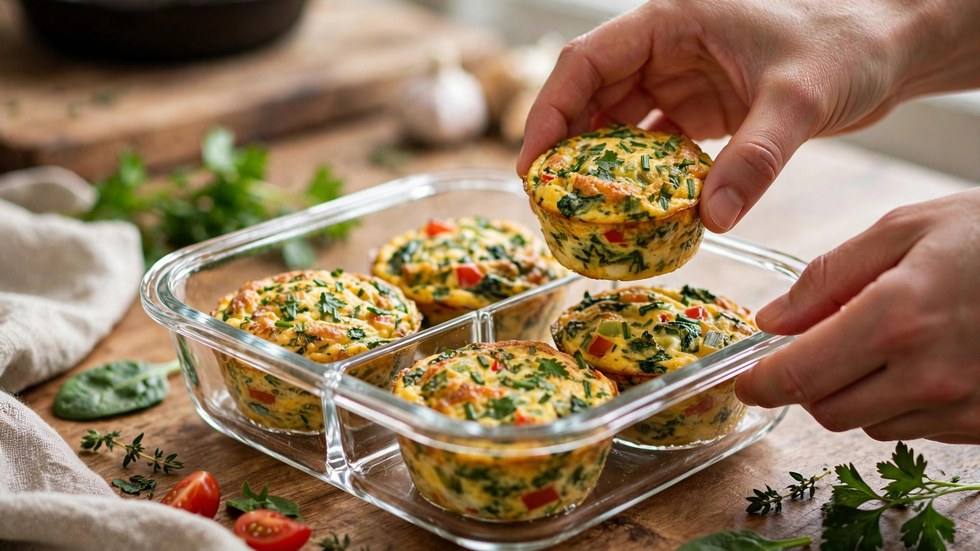
They’re savoury and substantial. A sweet breakfast sets some people up for a mid-morning slump; a protein-rich savoury one tends to hold steadier through to lunch. Two egg cups deliver roughly 12–14g of protein (approximate, depending on your add-ins) — that’s a proper breakfast, not a snack.
They’re infinitely customisable. The base is always the same — beaten eggs, a splash of milk, salt — and the fillings are whatever you’ve got. This makes them the ultimate crisper-cleaner: half a capsicum, three mushrooms, the end of a spinach bag, a lonely spring onion. Nothing goes to waste.
They reheat in under a minute. Thirty to sixty seconds in the microwave and they’re steaming. You can eat them in the car (not while driving, obviously), at your desk, or standing in the kitchen while the kettle boils. No bowl, no cutlery strictly required.
And the cost: even at current egg prices, twelve cups work out to well under a dollar each. Show me a cafe breakfast that competes with that.
Egg Muffin Cups Meal Prep: The Base Recipe
Makes 12 cups. Active time: 15 minutes. Bake time: 18–22 minutes.
Ingredients
- 12 large eggs
- 1/4 cup milk (any kind — it just loosens the mix slightly)
- 1 teaspoon salt, plus cracked pepper
- 1 cup grated cheese (tasty, mozzarella, or a mix)
- 2–3 cups total of chopped veg and extras — see combinations below
- Oil or butter for greasing (be generous)
Method
- Heat the oven to 180°C (160°C fan-forced). Position a rack in the middle.
- Grease like you mean it. Brush every cup of a 12-hole muffin tin thoroughly with oil or melted butter, getting right into the corners. Alternatively, use silicone muffin liners — they release perfectly and make cleanup trivial. Paper liners work but the egg tends to fuse to them; silicone is worth the small investment if you’ll make these regularly.
- Prep and pre-cook the fillings. Dice everything small — pea-sized pieces cook through and distribute evenly. Quickly sauté mushrooms, zucchini, onion and spinach for 3–4 minutes to drive off moisture. Capsicum, spring onion, corn, peas and grated carrot can go in raw. Distribute the fillings evenly among the cups — about 2 tablespoons per cup.
- Whisk the eggs. Crack all 12 into a large jug or bowl, add milk, salt and pepper, and whisk until completely uniform with no streaks of white. A jug with a spout makes pouring into the cups dramatically easier.
- Pour and top. Pour the egg mix over the fillings, filling each cup about three-quarters full. Sprinkle cheese over the top of each cup.
- Bake 18–22 minutes. They’re done when puffed, golden, and set in the centre — a knife inserted should come out clean. They’ll deflate a little as they cool; that’s normal, not a failure.
- Cool in the tin for 5 minutes, then run a thin knife around each cup and lift them out. Cool completely on a rack before storing.
The moisture rule
The difference between great egg cups and soggy ones comes down to water management. Eggs themselves are mostly water; add watery veg and you’ve got a swamp. The fixes: pre-cook mushrooms, zucchini, spinach and fresh tomatoes; drain tinned ingredients well; don’t add extra milk beyond the 1/4 cup; and make sure the cups are fully set before you pull them. Follow those and you’ll get firm, sliceable cups every time.
Six Filling Combinations That Actually Work
The base never changes — only what goes in the cups. Each combination below fills 12 cups:
- Classic ham & cheese: Diced ham, grated tasty cheese, finely diced onion, chives. The crowd-pleaser — make this one first.
- Mediterranean: Cherry tomatoes (halved and pre-roasted or well-drained), baby spinach (wilted first), crumbled feta, diced capsicum, oregano.
- Mushroom & Swiss: Sautéed mushrooms, grated Swiss or tasty cheese, thyme, a little garlic. Deeply savoury.
- Mexican: Black beans (rinsed), corn, diced capsicum, spring onion, cumin and smoked paprika in the egg mix, cheese on top. Salsa on the side.
- Smoked salmon & dill: Small pieces of smoked salmon, fresh dill, diced red onion, cream cheese dollops instead of grated cheese. The fancy one — best eaten within 2 days.
- Garden clean-out: Whatever’s in the crisper — grated zucchini (squeezed dry), grated carrot, peas, corn, spring onion, cheese. Different every time, always good.
A note on the salmon version: because it uses fresh fish, eat those cups within two days and don’t freeze them. The veggie versions are the true meal prep champions — they hold up for days and freeze well.
Storage, Freezing and Reheating
Cool the cups completely before storing — trapping steam in a container is how you get soggy bottoms and condensation. Then:
- Fridge: Sealed container, 3–4 days. Layer with baking paper if stacking so they don’t stick together.
- Freezer: Freeze individually on a tray until solid, then bag them. They keep well for 1–2 months for best quality. Thaw overnight in the fridge, or microwave from frozen (add an extra minute).
- Reheating: Microwave 30–60 seconds until steaming. Don’t overdo it — overheated eggs go rubbery fast. From the fridge, 45 seconds is usually the sweet spot. From frozen, about 90 seconds, flipping halfway.
Eat reheated cups promptly, and only reheat what you’ll eat. Like all cooked egg dishes, they’re best enjoyed fresh from the reheat, not left sitting around.
The Sunday double-batch
If mornings are truly chaotic in your house, make 24 cups on Sunday: two tins, two different filling combos. Fridge half for the week, freeze half. That’s nearly two weeks of breakfasts from one 45-minute session. The freezer stash is also brilliant for those mornings when the fridge supply runs out — future you will be grateful.
What 12 Cups Cost
Here’s the damage for a classic ham and cheese batch at typical Australian supermarket prices (estimates):
| Ingredient | Amount | Est. price (AUD) |
|---|---|---|
| Eggs | 12 large | $6.00 |
| Milk | 1/4 cup | $0.20 |
| Grated tasty cheese | 1 cup (100g) | $1.50 |
| Diced ham | 150g | $2.50 |
| Onion, capsicum, chives | Pantry/crisper | $1.00 |
| Oil for greasing | 1 tbsp | $0.20 |
| Total (12 cups) | $11.40 | |
| Per cup | $0.95 |
Two cups for breakfast: under two dollars. A week of breakfasts (10 cups, keeping a couple as spares): under ten dollars. The veggie clean-out version — using eggs, cheese and whatever’s in the crisper — can come in even cheaper, sometimes under $8 for the whole batch. Egg prices fluctuate, so buy when they’re on special; they keep for weeks in the fridge.
Run your own combinations through the calculator:
Australian Meal Prep & Macro Estimator
Pop in your costs in $ AUD and get per-portion cost, macros and storage guidance.
Troubleshooting: When Cups Go Wrong
- Stuck to the tin: Under-greased, or removed too soon. Grease thoroughly, cool 5 minutes in the tin, then run a knife around each cup. Silicone liners eliminate this problem entirely.
- Soggy bottoms: Too much moisture — watery veg not pre-cooked, or too much milk. Pre-sauté the wet veg and stick to 1/4 cup milk.
- Flat and dense: Overfilled cups, or the oven wasn’t hot enough. Fill three-quarters full and make sure the oven is fully preheated. Some deflation on cooling is normal.
- Rubbery texture: Overbaked or over-microwaved. Pull them when just set — they’ll carry over a little. Reheat gently, not on full blast for two minutes.
- Bland: Under-salted. Eggs need proper seasoning — a full teaspoon of salt across 12 eggs isn’t too much. Taste the raw mix (a tiny bit on your finger is fine) and adjust.
- Veg sunk to the bottom: Pieces too large or egg mix too thin. Dice small and don’t overdo the milk.
Beyond Breakfast
Egg cups aren’t just a morning food. They’re a legitimate any-time meal prep item:
- Lunchbox addition: Two cups plus salad and fruit is a complete packed lunch.
- After-school snack: Kids demolish these. Make a batch with mild fillings and watch them disappear.
- Smoko at work: Better than the vending machine in every measurable way.
- Picnic and road trip food: They’re good at room temperature for a couple of hours, making them ideal portable food (use an esky in summer).
- Party platters: Mini versions in a mini muffin tin, varied fillings, arranged on a platter — they look impressive for about twenty minutes of work.
The humble egg cup is proof that the best meal prep isn’t complicated. Eggs, veg, cheese, oven, done. Start with the classic ham and cheese this weekend, and by next week you’ll be inventing your own combinations from whatever’s left in the crisper — which is exactly how the best budget cooking works.


You May Also Like

High Fiber Batch Cooking Australia: Beans and Greens for Better Digestion

Sheet Pan Chicken Thighs Meal Prep: Cheap Sweet Potato Trays for the Week