Woolworths Hot Roast Chicken Meal Stretch: 1 Bird, 4 Dinners
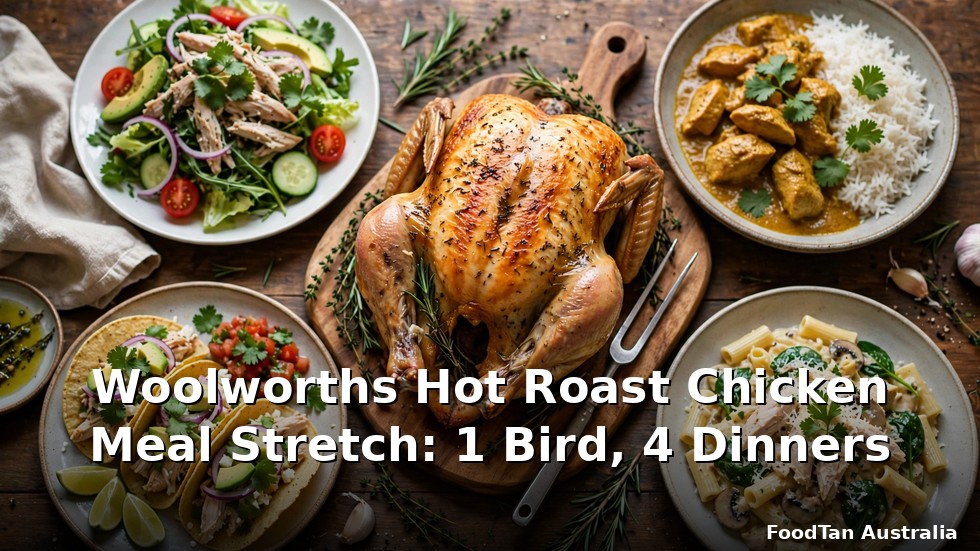
The hot roast chicken sitting under the heat lamps at Woolworths — sometimes jokingly called a “roast mudcrab” in parts of Australia for its burnished, lacquered skin — is one of the great unsung bargains in the store. For around $12 to $14 (estimate — prices vary by store and size), you get a fully cooked bird, roughly 1 to 1.2 kilos of it, ready to eat the second you get home. Most families carve it once, pick at the leftovers, and bin the carcass. That’s leaving half the value on the table. This woolworths hot roast chicken meal stretch turns one bird into four genuine family dinners, with a stock bonus at the end. All prices are estimates. Independent editorial — FoodTan is not affiliated with or endorsed by Woolworths.
Key Takeaways
- One Woolworths hot roast chicken (est. $12–$14) can anchor four family meals with smart portioning.
- Night 1 is the traditional roast dinner; nights 2–4 repurpose shredded meat so it never feels like leftovers.
- The carcass makes a free litre of stock — the fifth meal’s foundation.
- Total cost for four family dinners: roughly $30–$35 including supporting ingredients.
Woolworths Hot Roast Chicken Meal Stretch: The Golden Rules
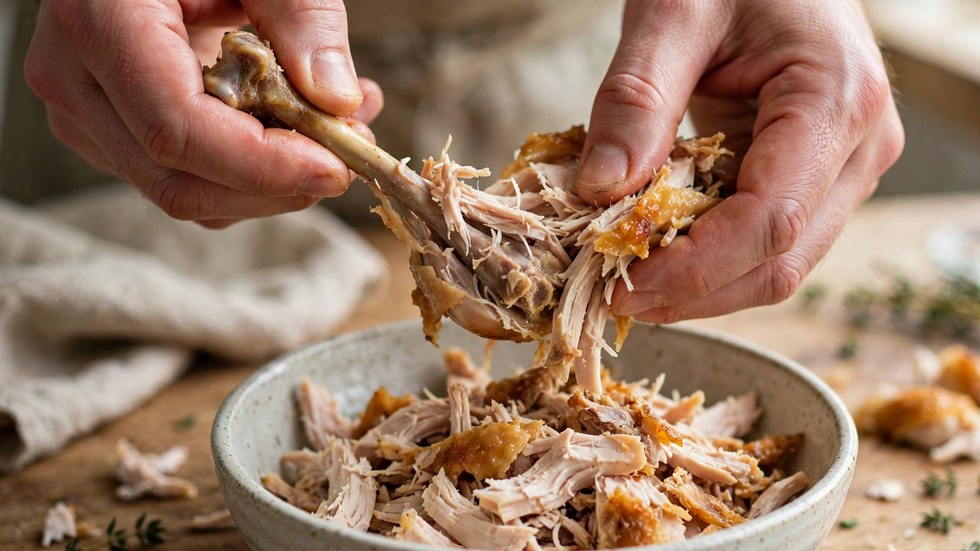
Rule one: strip it while it’s warm. The night you buy it, after the roast dinner, pull every scrap of meat off the bones while the bird is still warm — warm meat releases cleanly, cold meat clings. Divide into three labelled portions: big shreds for night two, small dice for night three, and the picked-over bits for night four. Rule two: the carcass is not rubbish. Bag it and freeze it the same night. Rule three: each meal must feel different. Nobody wants “chicken again.” Different cuisine, different format, different sauce — that’s what makes four chicken nights feel like four different dinners.
Night 1: The Classic Roast Dinner (serves 4)
Night one is sacred: the hot chicken, roast veg, gravy, no apologies. While the chicken rests, roast chopped potato, pumpkin, carrot and onion at 220°C for 40 minutes — cut them small so they crisp. Make gravy from a stock cube, the chicken’s resting juices, and a tablespoon of flour. Serve with steamed frozen peas. Eat the two breasts and the crispiest skin tonight; they’re at their best fresh. Estimated supporting cost: $6 for veg and gravy ingredients. This is the meal that makes the whole project feel like a treat rather than a thrift exercise.
Night 2: Chicken Fried Rice (serves 4)
Completely different energy: big wok, high heat, Asian flavours. Use the big shreds — about 400g of meat. Fry day-old rice (cook it the night before, or use the microwave pouches if time is tight) with diced onion, frozen veg, soy sauce and three beaten eggs stirred through at the end. The shredded roast chicken, already seasoned and smoky from the rotisserie, brings a depth that plain poached chicken never could. Supporting cost: roughly $3 (rice, eggs, frozen veg, soy from the pantry). Fifteen minutes, one pan, zero complaints.
| Meal | Chicken Used | Supporting Ingredients (est.) | Cost per Serve (est.) |
|---|---|---|---|
| Night 1: Roast dinner | Breasts + skin | Roast veg, peas, gravy — $6.00 | $4.50 |
| Night 2: Fried rice | ~400g big shreds | Rice, eggs, frozen veg — $3.00 | $3.75 |
| Night 3: Chicken pasta bake | ~300g diced | Pasta, tinned tomatoes, cheese — $5.00 | $4.25 |
| Night 4: Chicken noodle soup | Picked bits + stock | Noodles, veg, stock — $3.50 | $3.90 |
| 4 family dinners | 1 bird (~$13) | ~$17.50 | ~$4.10 avg |
Four family dinners for roughly $30.50 all up — about $4.10 a serve. The bird itself is the single biggest line item, which tells you everything about how far a roast chicken stretches when you plan for it.
Australian Meal Prep & Macro Estimator
Pop in your costs in $ AUD and get per-portion cost, macros and storage guidance.
Night 3: Chicken and Vegetable Pasta Bake (serves 4)
Now the Italian night. Toss 500g of penne with the diced chicken (~300g), a tin of tomatoes, a diced onion softened in olive oil, frozen spinach or mixed veg, and a cup of milk whisked with a tablespoon of flour for a cheat’s white sauce. Top with grated cheese and bake at 200°C for 25 minutes until bubbling and golden. The roast chicken flavour — garlic, herbs, smoke — perfumes the whole bake in a way plain chicken never manages. Supporting cost: about $5. This is the meal that reheats best, so it’s your designated lunchbox legend for the next two days.
Night 4: Chicken Noodle Soup From the Carcass (serves 4)
The finale, and the cleverest meal of the four. That frozen carcass goes into a big pot with water, an onion, a carrot, celery if you have it, and a bay leaf. Simmer gently for 2–3 hours — low and slow extracts every bit of flavour and collagen. Strain it: you’ve just made a litre-plus of rich chicken stock for free. Pick any remaining meat off the bones and add it back with diced carrot, egg noodles and a handful of frozen peas. Season boldly with salt, pepper and a squeeze of lemon. Supporting cost: roughly $3.50 for noodles and veg. A soup that tastes like it simmered all day — because it did, while you did other things.
The Stock Bonus: Meal Five’s Head Start
You’ll almost certainly have stock left over — a carcass yields more than one soup needs. Freeze the extra in 500ml containers or even ice-cube trays for portion-sized flavour bombs. That frozen stock is the foundation of next week’s risotto, curry, or a second soup that costs you nothing but vegetables. Professional chefs treat stock as liquid gold; home cooks who make it from a $13 chicken’s leftovers are thinking exactly like professionals.
What If the Bird Is Small?
Rotisserie chickens vary — sometimes you get a plump 1.3kg bird, sometimes a scrawnier one. If your chicken is on the small side, the stretch still works with two adjustments: bulk night two’s fried rice with extra egg and veg, and bulk night three’s pasta bake with a tin of chickpeas or white beans stirred through. Legumes are the universal stretcher — cheap, filling, and invisible in a saucy bake. The four-meal structure holds; only the ratios shift.
Timing It Across the Week
Buy the chicken on a Sunday or Monday night — that’s when they’re freshest and when your week of dinners begins. Nights one and two run consecutively while the meat is at its best. Nights three and four can slide to Wednesday/Thursday; shredded roast chicken keeps four days refrigerated without any drama, and the frozen carcass waits patiently for soup night whenever you’re ready. Label everything. Future-you, opening the fridge at 6pm on Wednesday, will thank present-you.
The Maths: Why This Beats Every Other Cheap Protein
Let’s put the roast chicken up against its rivals on protein per dollar. A $13 bird yields roughly 600–700g of edible meat — about 180g of protein. That’s roughly 14g of protein per dollar, before counting the free stock. Chicken breast at $13/kg gives you about 23g of protein per dollar on paper — better, until you factor in that breast needs cooking from raw (time, energy) and most shoppers overcook it. Tinned tuna at full price manages about 10g per dollar. Eggs, the reigning champion at roughly 25g per dollar, still win — but nobody wants to eat eggs for four straight dinners.
The roast chicken’s real edge isn’t pure protein economics — it’s that it’s cooked, seasoned, and ready. You’re buying back an hour of your evening for the price difference, and the rotisserie seasoning means every downstream meal starts from a flavour base you’d never build from scratch on a Tuesday night. Convenience has a value; this is the cheapest convenient protein in the store.
If You Hate the Taste of Leftovers
Some people are leftover-averse, and no amount of budgeting logic fixes it. The disguise strategy is your friend: never serve the chicken in a recognisable form twice. Night one’s sliced breast becomes night two’s wok-tossed shreds (different texture), night three’s baked-under-cheese dice (different format), night four’s soup (unrecognisable). Change the cuisine each night and your brain files them as four different meals, because culinarily, they are.
The other trick is the reheat. Microwaved chicken goes rubbery and sad; chicken folded through a hot sauce, tossed in a screaming wok, or baked under cheese does not. Every night-three and night-four preparation reheats the meat in liquid or fat, which is exactly how you dodge the dreaded leftover texture. Follow the plan as written and the only night that tastes like “leftover chicken” is none of them.
You May Also Like

How to Beat Grocery Inflation Australia: Sydney, Melbourne & Brisbane Tactics
High Protein Meal Prep Woolworths: 5 Days Under $40 AUD