
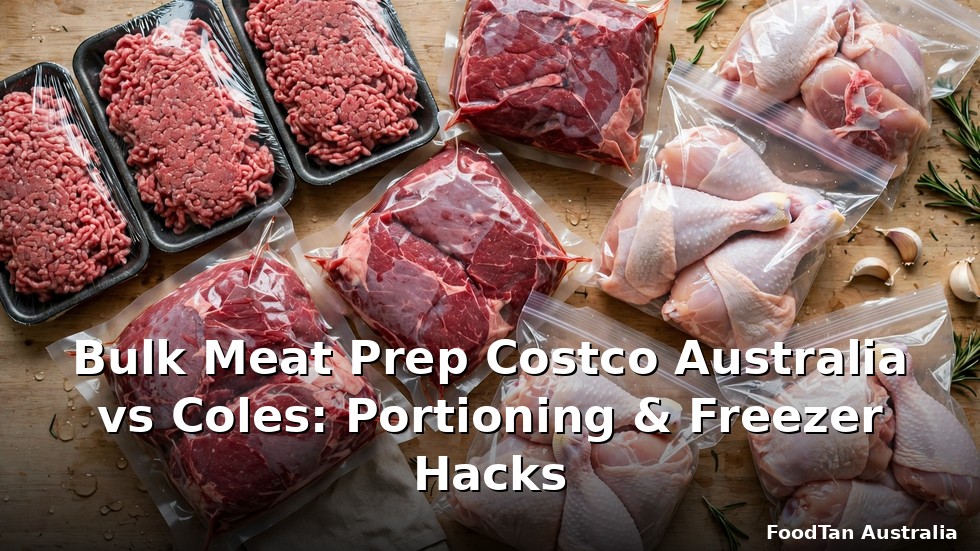
Bulk Meat Prep Costco Australia vs Coles: Portioning & Freezer Hacks
There’s a specific kind of quiet panic that hits when you open a Costco receipt and realise you just bought four kilos of chicken thigh for a household of two. I’ve been there. The trolley felt victorious; the fridge feels overwhelmed. But here’s the thing I learned after a decade of bulk meat prep costco australia style shopping: the bulk buy itself isn’t the strategy. The portioning is.
This guide is an honest, independent look at buying meat in bulk from Costco Australia versus playing the Coles half-price specials game — and the freezer system that makes either approach actually work. FoodTan is editorially independent and not affiliated with or endorsed by Costco, Coles, or any supermarket chain. All prices below are estimates based on typical shelf prices and will vary by store, season, and region.
Key Takeaways
- Costco wins on everyday per-kilo prices for chicken breast, mince, and pork — but only if you buy the right cuts and freeze the lot properly.
- Coles half-price specials (roughly 50% off mince, snags, and chicken) routinely beat Costco prices — the catch is you have to buy when the deal appears, not when you need it.
- Flat-freezing mince and using zip-lock bags with a water-displacement trick gives you cryovac-style results without a machine.
- Label everything with cut, weight, and date. A chest freezer without a FIFO system is just an expensive graveyard for meat.
The Membership Question: Is Costco Worth It for Meat Alone?
Before we talk per-kilo prices, let’s deal with the elephant in the aisle: the Costco membership fee. An annual membership is a real cost, and if you’re driving 40 minutes each way to get there, your petrol matters too. I’ve seen plenty of people buy a membership for the rotisserie chicken and the samples, then discover the meat aisle is where the actual value lives.
The honest answer: Costco only pays for itself on meat if you’re buying for three or more people, or if you’re disciplined enough to portion and freeze everything on the day you buy it. A solo shopper who lets half a pork loin go slimy in the fridge is losing money, not saving it. Bulk without a system is just expensive waste wearing a discount costume.
Bulk Meat Prep Costco Australia: What the Per-Kilo Prices Really Look Like
Here’s the part nobody talks about in the checkout-line chatter: bulk meat prep costco australia style only makes sense when you know the numbers cold. Costco doesn’t do specials the way Coles does — its prices are steady, which is both the appeal and the trap. You never catch a screaming bargain, but you never pay peak prices either.
The table below compares typical Costco per-kilo prices against Coles regular prices and Coles half-price special prices. Treat every figure as a rough estimate — prices shift with seasons, regions, and specials cycles.
| Cut | Costco (bulk pack, per kg) | Coles full price (per kg) | Coles half-price special (per kg) |
|---|---|---|---|
| Beef mince (regular) | ~$14–$16 | ~$18–$20 | ~$9–$10 |
| Chicken breast fillet | ~$14–$16 | ~$19–$22 | ~$10–$11 |
| Chicken thigh (boneless) | ~$12–$14 | ~$17–$19 | ~$9 |
| Pork loin / loin chops | ~$12–$14 | ~$17–$19 | ~$9–$10 |
| Beef chuck / casserole | ~$18–$22 | ~$24–$28 | ~$13–$14 |
| Lamb (shoulder or leg) | ~$16–$20 | ~$24–$30 | ~$14–$16 |
The pattern is obvious: Costco consistently undercuts full-price Coles by a decent margin, but a Coles half-price week demolishes both. That’s why the sharpest shoppers I know do both — they buy their baseline protein at Costco and treat Coles catalogues like a second income stream, buying deep whenever mince or chicken goes half-price.
How to Portion a 4–5kg Bulk Pack Without a Cryovac Machine
This is where bulk meat either becomes genius or goes wrong. A four-kilo tray of mince is not a meal — it’s six to eight meals waiting to be shaped. The goal is to break everything into usable, family-sized portions on the day you buy it, because meat portions freeze best when they go from store to freezer in hours, not after three days of fridge limbo.
The flat-freeze mince method
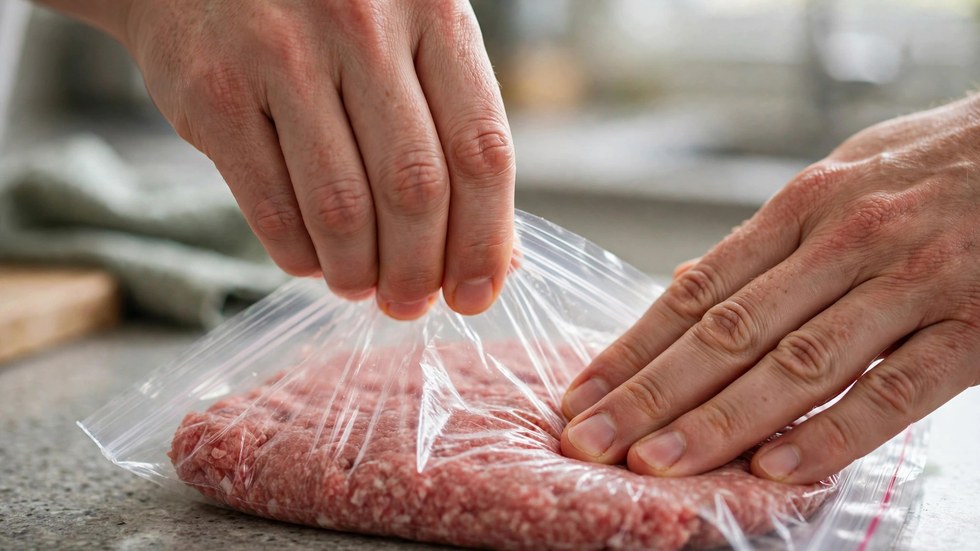
Mince is the easiest win in the entire bulk meat game. Divide it into 500g portions (a proper family serve for spag bol, chilli, or meatloaf), press each portion flat inside a zip-lock bag to about 1–2cm thick, and squeeze the air out before sealing. Flat slabs freeze faster, stack neatly like books on a shelf, and defrost in a fraction of the time a thick blob takes. When you’re in a hurry, you can even snap a frozen slab in half for a smaller serve.
The water-displacement trick for zip-lock bags
You don’t need a vacuum sealer. Portion your chicken thighs or steaks into zip-lock bags, seal each bag almost all the way, then slowly lower it into a sink of cold water. The water pressure pushes the air out through the small opening; seal it shut right at the waterline. It’s not perfect, but it removes most of the air — and air is the enemy. Every pocket of air in a freezer bag is a future patch of freezer burn.
Portion sizes that actually match real cooking
Portion for the dish, not the drawer. Chicken thighs freeze best in the exact number you’d use for one curry or tray bake — usually four to six. Mince works in 500g slabs. Steaks get bagged in pairs. Diced casserole beef goes into 750g bags because that’s what a slow-cooker recipe actually calls for. Future you, cooking dinner at 5:30pm on a Tuesday, will be grateful you thought in meals rather than kilos.
Freezer Hacks That Actually Stop Freezer Burn
Freezer burn isn’t a food safety issue — it’s a quality killer. That grey, leathery patch on your steak is just dehydration, but it tastes like disappointment. The fixes are boring and they work: remove as much air as possible, double-wrap anything with sharp bones (drumsticks and cutlets love poking through single bags), and don’t crowd a full week’s worth of warm meat into one freezer shelf at once.
If your freezer has a fast-freeze setting, use it when you load in a big bulk buy. Faster freezing means smaller ice crystals, which means better texture when you cook it. And here’s one that sounds fussy but pays off: don’t refreeze defrosted meat unless you’ve cooked it first. Plan your portions so you never need to. That flat-freeze mince slab snaps in half — problem solved before it exists.
Labelling and the FIFO System
A chest freezer without labels is where good intentions go to become unidentifiable white blocks. Buy a permanent marker and masking tape — the cheapest tools in this entire system — and label every bag with three things: the cut, the weight or portion count, and the date it went in. “Chicken thigh x5, 17 Oct” beats “mystery bag, ???” every single time.
Then run FIFO: first in, first out. New bags go at the back or the bottom; the oldest bags stay where you grab first. I keep a simple running list on the freezer lid with a whiteboard marker — what’s in there and when it went in. It takes two minutes after each bulk shop and it means nothing lingers long enough to suffer.
As a rough guide, well-wrapped meat holds good quality for about 3 months for mince and sausages, 6 months for steaks and chops, and up to 9–12 months for larger roasts. These are quality guidelines, not safety cliffs — but quality is the whole point of this exercise.
Defrosting Without the Drama
The widely-known safe guidance is simple: move meat from the freezer to the fridge the night before you need it. A 500g flat slab of mince defrosts overnight easily; a thick roast needs a full day or two. If you forgot — and you will forget — cold water in the sink with the bag sealed works in an hour or two; just cook it straight away afterwards. What you don’t do is leave it on the bench all day. Every food safety authority on earth agrees on that one.
A Realistic Cost Breakdown: One Month of Bulk Meat for a Family of Four
Let’s put it together. Say a family of four does one Costco bulk run plus opportunistically buys one Coles half-price special per month:
| Buy | Where | Cost (estimate) | Meals it covers |
|---|---|---|---|
| 4kg chicken thigh | Costco | ~$52 | 8 meals |
| 3kg beef mince | Coles half-price special | ~$30 | 6 meals |
| 2.5kg pork loin | Costco | ~$33 | 5 meals |
| 2kg diced casserole beef | Costco | ~$40 | 3–4 meals |
| Total | ~$155 | ~22–23 family meals |
That’s roughly $7 per family dinner for the protein component — and that’s before the vegies and pantry staples, which barely move the needle when you’re cooking at home. Play with your own numbers below:
Australian Meal Prep & Macro Estimator
Pop in your costs in $ AUD and get per-portion cost, macros and storage guidance.
The Verdict: Do Both, But Freeze Like You Mean It
If I had to give you one rule, it’s this: Costco for the steady baseline, Coles for the specials, and a freezer system that treats bulk meat like the investment it is. The people who save real money on meat aren’t the ones who found the cheapest price — they’re the ones whose freezers are organised, labelled, and actually rotated. Buy big, portion fast, freeze flat, label everything. Your future self is already thanking you.

You May Also Like
IGA Supermarket Budget Meal Prep: High-Protein Shopping List for Regional Towns
Coles Perform Meal Prep Challenge: High-Protein Bowls Under $4 AUD