
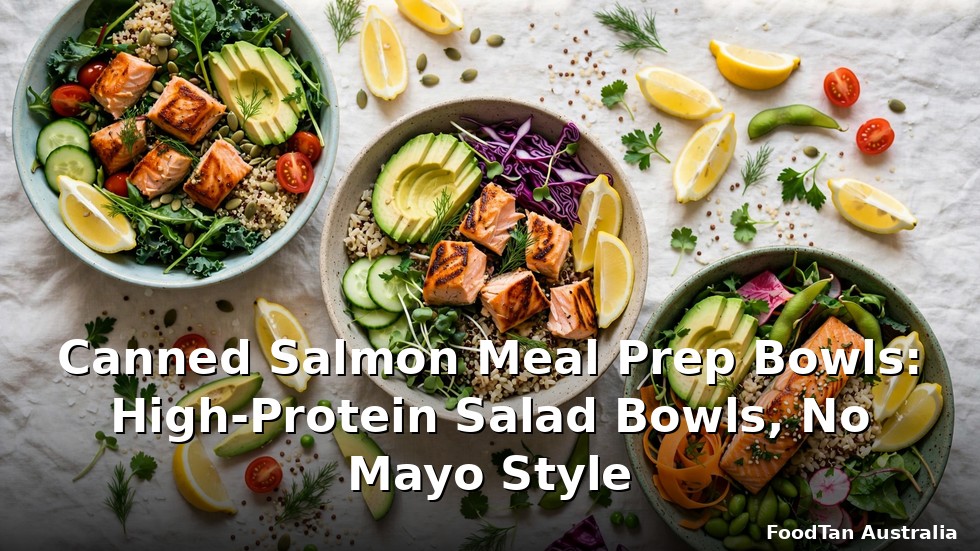
Canned Salmon Meal Prep Bowls: High-Protein Salad Bowls, No Mayo Style
Tinned salmon is one of the most underrated proteins in the Australian supermarket. It costs a few dollars a tin, it’s already cooked, it’s packed with protein, and it keeps in the pantry for years — no freezer space required, no use-by anxiety. These canned salmon meal prep bowls skip the traditional mayo-heavy approach and build fresh, vibrant lunches around the fish instead: lemon and herbs, soy and ginger, yoghurt-based dressings, and bold spice blends.
The no-mayo thing isn’t about being precious. It’s practical. Mayo-based salads get heavy and sad by day three in the fridge, and they’re not at their best in a summer lunchbox. Vinaigrettes, citrus, and yoghurt dressings hold up better over several days, taste fresher, and let the salmon actually shine instead of burying it.
Five bowls, one tin each (roughly), minimal cooking. Here’s the system.
Key Takeaways
- Tinned salmon is a meal prep bargain. Around $2.50–$4 per tin (est.), already cooked, shelf-stable for years — buy a dozen when it’s half price.
- Ditch the mayo for prep. Vinaigrettes, citrus juice and yoghurt dressings keep better over 3–4 days and taste fresher reheated… well, served cold.
- Dress at serving time. Keep dressings separate and add them the morning of — the single biggest factor in bowls that stay crisp.
- Bones are normal (and edible). Tinned salmon often contains soft, calcium-rich bones. Mash them in or pick them out — your call, both are fine.
- One tin = one generous bowl. A 415g tin (drained weight ~300g) builds a seriously substantial lunch with plenty of protein.
Why Tinned Salmon Wins for Work Lunches
Let’s compare the options for a protein-rich packed lunch. Fresh salmon fillets are beautiful and wildly expensive — $30+ a kilo on a good day. Chicken breast needs cooking, cooling, and careful storage. Tuna is the obvious competitor, and it’s fine, but salmon brings more flavour and variety to a weekly rotation.
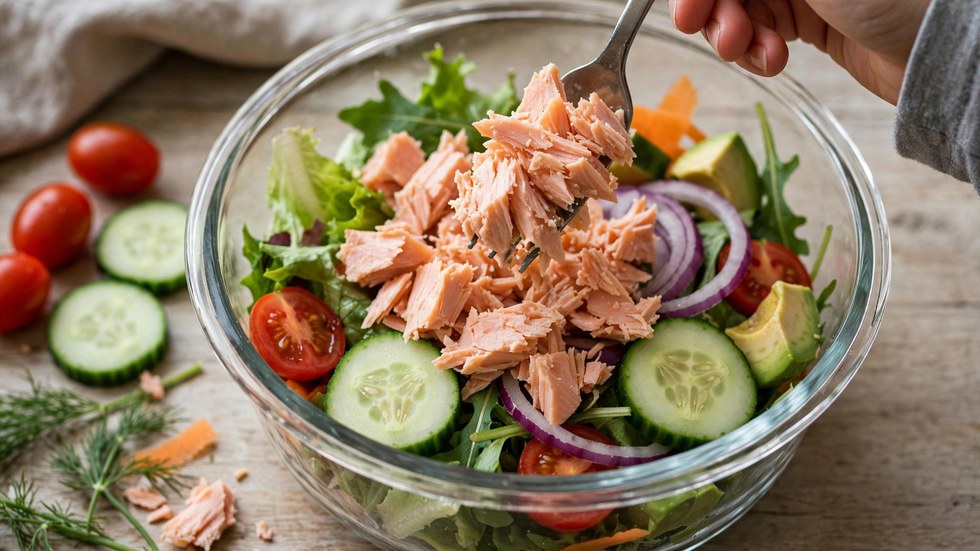
Tinned salmon sits in the sweet spot: the price of tuna (roughly — salmon tins run slightly higher, around $2.50–$4 for a 415g tin at full price, often half that on special), the convenience of zero cooking, and a richer flavour that stands up to bold dressings. A single tin delivers around 40–50g of protein (approximate — varies by brand and drained weight), which is more than most people get in an entire day, let alone one lunch.
The pantry stability is the quiet superpower. Fresh proteins demand planning — buy, cook within days, manage the timeline. Tinned salmon waits patiently in the cupboard until you need it. For meal prep, that means you can assemble bowls on Sunday without a separate protein-cooking step, and you can keep emergency tins for the weeks when the Sunday prep doesn’t happen.
Choosing your tin
Pink salmon is the budget workhorse — cheaper, milder, perfect for bowls where other flavours lead. Red (sockeye) salmon is pricier with a deeper colour and flavour; nice for simpler bowls where the fish is the star. “No added salt” versions exist if you’re watching sodium. Whatever you buy, stock up when it’s half price — tinned fish promotions are among the most reliable catalogue cycles at Coles and Woolies, and the tins keep for years.
The bone question
First-timers are often surprised by the bones in tinned salmon. They’re completely normal — the canning process softens them until they’re mashable and edible (they’re a good source of calcium, incidentally). You can mash them straight into the fish and never notice, or pick out the larger spine bones if the texture bothers you. Neither approach is wrong.
Canned Salmon Meal Prep Bowls: 5 No-Mayo Combos
Each bowl serves one generously. For a four-day prep, multiply your chosen combos and store components separately — full assembly instructions below.
1. Lemon, Herb & White Bean
Mediterranean vibes, maximum simplicity. The white beans bulk out the tin and add creaminess without any mayo.
Per bowl: 1 tin salmon (drained, flaked), 3/4 cup tinned cannellini beans (rinsed), halved cherry tomatoes, diced cucumber, sliced red onion, chopped parsley and dill, dressed with olive oil, lemon juice, salt and pepper.
Why it preps well: Everything here is sturdy. Beans, tomatoes and cucumber hold up for days; the herbs stay perky if stored dry and added fresh. This is the bowl to make when you want zero morning effort — it can be fully assembled the night before.
2. Soy, Ginger & Sesame
The Asian-inspired bowl that tastes like it came from a $18 poke shop. The dressing does all the heavy lifting.
Per bowl: 1 tin salmon (drained, flaked), cooked rice or soba noodles, shredded cabbage, grated carrot, edamame (frozen, thawed), sliced spring onion, sesame seeds. Dressing: soy sauce, sesame oil, rice vinegar, grated ginger, a touch of honey.
Prep notes: Keep the dressing in a small jar and add at serving time. Cabbage is the hero prep veg here — it stays crunchy for days, unlike lettuce. Cook a big batch of rice on Sunday; portion into containers.
3. Greek Yoghurt, Cucumber & Dill
All the freshness of a tzatziki-style bowl without a drop of mayo. The yoghurt brings creaminess and a protein bonus.
Per bowl: 1 tin salmon (drained, flaked), diced cucumber, cherry tomatoes, kalamata olives, red onion, chopped dill and mint. Dressing: Greek yoghurt thinned with lemon juice, grated garlic, salt and pepper.
Prep notes: Mix the yoghurt dressing on Sunday and store separately — it keeps for days. Assemble the bowl components in containers; add dressing in the morning. Serve with pita bread or over couscous.
4. Curried Mango & Rice
Sweet, tangy, and completely different from the others — proof that tinned salmon isn’t a one-note ingredient.
Per bowl: 1 tin salmon (drained, flaked), cooked rice, diced mango (fresh in season, frozen-thawed otherwise), diced capsicum, spring onion, coriander, toasted cashews. Dressing: Greek yoghurt or coconut yoghurt mixed with curry powder, lime juice and a pinch of salt.
Prep notes: The curry yoghurt dressing improves after a day as the spices bloom. Add cashews at serving time so they stay crunchy. This one’s a summer standout.
5. Smoky Corn & Black Bean
Southwestern flavours, pantry staples, maximum heartiness. The most filling bowl of the five.
Per bowl: 1 tin salmon (drained, flaked), black beans (rinsed), corn kernels, diced capsicum, red onion, coriander, lime. Dressing: olive oil, lime juice, smoked paprika, cumin, salt.
Why it preps well: Beans, corn and capsicum are all bulletproof over several days, and the smoky lime dressing soaks in beautifully. This bowl arguably tastes better on day two than day one.
The Sunday Assembly System
No cooking required for most of these bowls — just assembly. Here’s the efficient routine:
- Cook the grains. Rice, couscous or soba for the bowls that need them. One pot, while you do everything else.
- Drain and flake the salmon. Open the tins, drain well, flake into a bowl with a fork. Pick out large bones if you like, mash in the small ones. Season with salt, pepper and lemon juice — tinned salmon needs seasoning to wake it up.
- Chop the sturdy veg. Cucumber, capsicum, onion, carrot, cabbage — dice and store. These all hold up for days.
- Mix the dressings. Small jars, one per bowl type. Label them — soy-ginger looks identical to smoky-lime at 7am.
- Portion the bases. Grains and sturdy veg into containers. Keep delicate items (herbs, avocado, crunchy toppings) separate to add fresh.
Morning assembly: grab a container, add the salmon portion, add dressing, top with fresh bits. Under two minutes.
What not to prep ahead
A few things don’t survive the week: sliced avocado (browns within hours — add fresh or skip), delicate lettuce (use cabbage instead), fresh herbs beyond 2–3 days (add mid-week), and crunchy toppings like nuts, seeds and crackers (add at serving time). Build around sturdy ingredients and these bowls stay excellent through Thursday.
What Four Bowls Cost
Costed at typical Australian supermarket prices (estimates — specials change everything):
| Ingredient (4 bowls) | Est. price (AUD) | Notes |
|---|---|---|
| Tinned salmon 415g x 4 | $12.00 | $3/tin; often half price on special |
| Rice or grains | $1.50 | Pantry staple; pennies per serve |
| Cannellini beans 400g tin | $1.20 | One tin covers 2 bowls |
| Black beans 400g tin | $1.20 | One tin covers 2 bowls |
| Cherry tomatoes 250g | $3.00 | Cheaper in summer |
| Cucumber, capsicum, onion, carrot | $4.00 | Fresh veg across all bowls |
| Greek yoghurt 200g | $2.00 | Two dressings’ worth |
| Frozen edamame + corn | $2.50 | Freezer staples |
| Pantry: soy, oils, spices, lemon | $2.00 | Per-week share |
| Estimated total (4 bowls) | $29.40 | Roughly $7.35 per bowl |
At $7–$8 per bowl for a high-protein lunch with 40g+ of protein, the value is excellent — and on special weeks (half-price salmon tins), it drops toward $5. Compare with a bought poke bowl at $16–$20 and the savings are obvious.
Cost out your own bowl builds here:
Australian Meal Prep & Macro Estimator
Pop in your costs in $ AUD and get per-portion cost, macros and storage guidance.
Food Safety for Fish Bowls
A few plain-language rules since we’re dealing with fish and packed lunches:
- Refrigerate promptly. Assemble bowls and get them into the fridge — don’t leave components sitting on the bench while you “get around to it”. In summer especially, move fast.
- 3–4 days max. Once opened and mixed into bowls, eat within 3–4 days. The tin itself lasts years unopened; the clock starts when you open it.
- Keep cold at work. An insulated lunch bag with an ice brick keeps your bowl properly cold until lunchtime. A fish bowl warming up on a desk all morning is not the goal.
- Trust your nose. If anything smells off, don’t eat it. Tinned salmon should smell like the sea, not like regret.
- Don’t refreeze. These bowls are a fridge-only affair. Make what you’ll eat within the week.
Keeping Salmon Bowls in Rotation
Five bowls is a great start, but the real win is the formula: tinned protein + sturdy base + crunchy veg + bold dressing. Once that formula clicks, you can improvise endlessly:
- Swap the protein: Tinned tuna, sardines, or mackerel all work in the same bowls, often cheaper. Sardines on the lemon-herb bowl are outstanding.
- Swap the base: Quinoa, couscous, soba, rice noodles, or just extra veg for a low-carb version.
- Steal dressing ideas: Miso-tahini, peanut-lime, chilli-crisp oil, green goddess yoghurt — a good dressing makes any combination work.
- Seasonal swaps: Mango in summer, roast pumpkin in winter, asparagus in spring. The bowls follow the seasons and the specials.
Tinned salmon bowls are the ultimate low-effort, high-return meal prep: no cooking, minimal washing up, serious protein, and genuine variety across the week. Grab a few tins on special, pick two bowls to start with, and you’ll have lunches sorted before the weekend’s over.
You May Also Like
High Fiber Batch Cooking Australia: Beans and Greens for Better Digestion
Turkey Mince Bolognese Prep: Batch Cooking for 4-Day Work Lunches