Frozen vs Fresh Veggies Australia: Your Woolies Winter Cooking Guide
Key Takeaways
- Frozen vegetables are typically snap-frozen within hours of picking, so their nutrient levels hold up well against fresh veg that’s been sitting in transit and on shelves.
- In winter, imported or out-of-season fresh veg at Woolies can cost two to three times more per kilo than the frozen equivalent — estimates below show where the savings land.
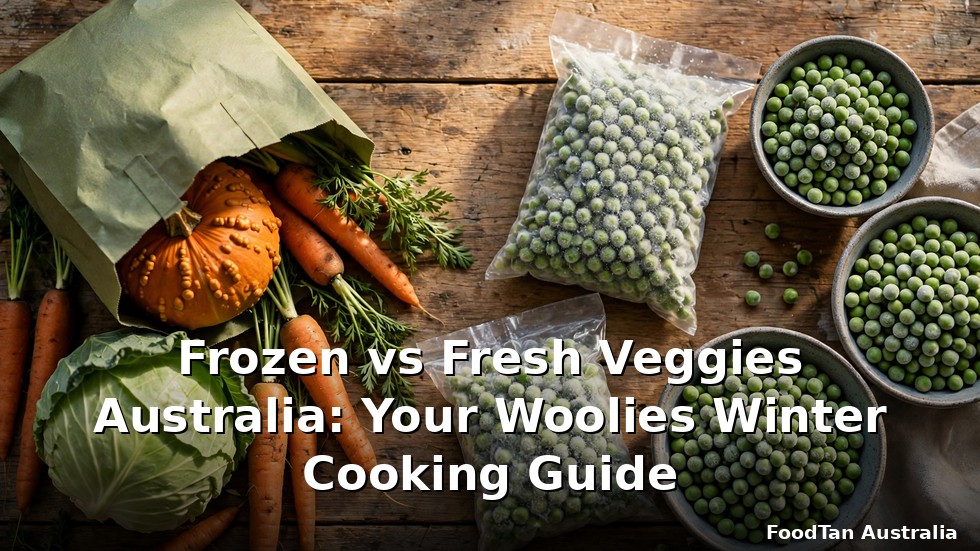
- The smart play is a split trolley: buy hardy winter fresh veg (pumpkin, carrots, cabbage) and lean on frozen for peas, spinach, corn and mixed veg.
- Frozen veg shines in soups, curries, bakes and stir-fries where texture differences disappear; fresh wins for salads, roasts and anything where crunch matters.
Every June, the same thing happens in my kitchen. The tomato prices climb, the capsicums look tired and expensive, and I stand in the Woolies produce aisle doing mental maths I never signed up for. If you’ve ever wondered whether the frozen vs fresh veggies Australia debate actually has a winner in winter, this guide settles it — with real trolley logic, not food-snob rules.
Here’s the short version before we dig in: neither side wins outright. Frozen veg wins on price and convenience for half your cooking, fresh wins on texture and flavour for the other half, and the households that eat best through winter buy both on purpose. Let me show you exactly how to split it. (FoodTan is independent editorial and is not affiliated with or endorsed by Woolworths, Coles, Aldi, IGA or Costco.)
Why the Frozen vs Fresh Veggies Australia Debate Heats Up in Winter
Winter is when the gap between the two really shows. Australian winters don’t shut down local growing the way a northern-hemisphere winter does, but plenty of warm-season favourites — tomatoes, capsicum, zucchini, beans — either come from glasshouses or get trucked long distances. Either way, you pay for it.
Frozen vegetables, on the other hand, don’t care what month it is. They’re picked at peak season, snap-frozen, and sold at a flat price all year. That price stability is gold for a budget meal prepper, because it means your June grocery bill doesn’t blow out just because you wanted peas in your shepherd’s pie.
There’s also the waste angle. Fresh veg in winter can go limp fast if your fridge runs warm or you buy aspirationally (we’ve all bought the sad bag of spinach with big salad dreams). Frozen veg waits patiently in the freezer for weeks with zero waste. For a household trying to stretch every dollar, that matters as much as the sticker price.
The Price Reality at Woolies in Winter
Prices move around and differ by state, so treat every figure here as an estimate based on typical winter shelf prices — not a quote. The pattern, though, is consistent year after year.
| Vegetable | Fresh (est. $/kg, winter) | Frozen (est. $/kg) | Winter winner |
|---|---|---|---|
| Peas | $9 – $12 | $3 – $4 | Frozen, by a mile |
| Spinach | $16 – $22 (baby spinach) | $4 – $6 | Frozen for cooking |
| Corn kernels | $6 – $9 (off-cob equiv.) | $3 – $4 | Frozen |
| Broccoli | $5 – $8 | $4 – $6 | Close — buy what’s on special |
| Cauliflower | $4 – $7 | $5 – $7 | Fresh, usually |
| Pumpkin (butternut) | $2.50 – $4 | $5 – $7 | Fresh, easily |
| Carrots | $2 – $3 | $4 – $6 | Fresh, easily |
| Capsicum | $9 – $14 | $6 – $9 (strips) | Frozen for cooking |
| Mixed veg (carrot, pea, corn) | n/a | $2.50 – $3.50 | Frozen staple |
The pattern is obvious once you see it laid out. Out-of-season or perishable veg: frozen wins hard. Hardy winter veg that’s in season locally — pumpkin, carrots, cabbage, cauliflower, sweet potato — fresh wins on price and you should load up. This is the entire frozen vs fresh veggies Australia strategy in one table.
Nutrition: What Actually Survives the Freezer
Let’s clear up the biggest myth first: frozen vegetables are not the sad, depleted cousins of fresh ones. Commercial freezing happens fast — veg is blanched and snap-frozen within hours of harvest, which locks in most of its vitamin and mineral content. A bag of frozen peas can easily match or beat “fresh” peas that spent days in a truck, a distribution centre and a display fridge.
Where fresh loses ground
Some vitamins, particularly vitamin C and certain B vitamins, degrade with time, light and heat. That gorgeous fresh broccoli starts losing them the moment it’s picked. By the time it reaches your crisper — then sits there another four days while you decide what to cook — it’s not the nutritional powerhouse it was on the farm. Frozen broccoli, frozen solid since harvest day, holds its ground better over the same week.
Where frozen loses ground
Blanching before freezing leaches a small amount of water-soluble vitamins. It’s a modest loss, and honest — but it’s real. Also worth knowing: frozen veg with added sauces or butter blends can carry extra sodium and saturated fat, so check the ingredients and stick to plain frozen veg for everyday cooking.
The practical takeaway for winter meal prep: if you’re cooking the veg anyway — into soups, stews, curries, pasta bakes — frozen is nutritionally a like-for-like swap for fresh. Save your fresh-veg budget for things you eat raw or lightly cooked, where texture and flavour genuinely matter.
Taste and Texture: Where Each One Wins
Nutrition aside, let’s talk about the thing you actually notice on the plate. Freezing ruptures plant cell walls — that’s physics, not a quality flaw — so thawed frozen veg will never have the snap of fresh. The trick is matching the veg to the cooking method.
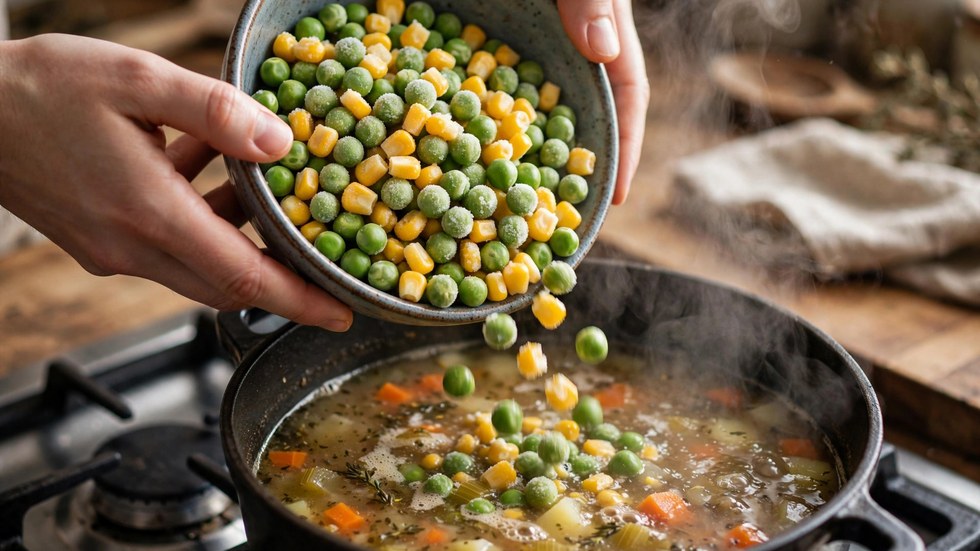
Frozen wins outright in: slow-cooked soups and stews, curries, fried rice, savoury mince, pasta bakes, and smoothies (frozen spinach disappears completely into a banana smoothie). In all of these, the veg is soft by design, so the texture difference vanishes.
Fresh wins outright in: salads, roast vegetable trays, vegetable crudités, stir-fries where you want crunch, and anything where the vegetable is the hero of the plate — think a big tray of roast pumpkin and carrots with crispy edges. No frozen substitute gets you those caramelised edges.
The grey zone — stir-fries, frittatas, fried rice — goes to whoever’s on special. Frozen stir-fry blends straight from the freezer into a ripping-hot wok actually work brilliantly if you don’t overcrowd the pan; the key is high heat and not thawing first.
The Smart Split: A Winter Shopping Formula That Works
After years of winter meal prepping, here’s the formula I’d hand a mate who’s trying to eat well on a budget:
- Fresh, every week: pumpkin or butternut, carrots, cabbage, cauliflower, sweet potato, onions, potatoes. These are cheap, in season, and roast or store beautifully.
- Frozen, every shop: peas, corn kernels, spinach, mixed veg, and a stir-fry blend. These cover your out-of-season gaps at a flat price.
- Fresh only on special: broccoli, beans, capsicum, zucchini. Buy when the ticket price drops, never at full winter price out of habit.
- One bag rule: keep at least one bag of frozen mixed veg as your emergency backstop. It turns mince, tinned tomatoes and rice into dinner on nights you’d otherwise order takeaway.
This split typically lands a household’s weekly vegetable spend noticeably lower than an all-fresh trolley in winter, with less waste and more variety on the plate. Run your own numbers through the calculator below with your local estimates.
Australian Meal Prep & Macro Estimator
Pop in your costs in $ AUD and get per-portion cost, macros and storage guidance.
Five Winter Meals That Use Both Sides Brilliantly
1. Pumpkin and frozen pea soup. Roast fresh pumpkin until caramelised, simmer with stock, then stir through a cup of frozen peas in the last five minutes. The peas lift the whole pot with colour and sweetness.
2. Savoury roo or beef mince with frozen mixed veg. Brown the mince with onion, add a bag of frozen mixed veg and a tin of tomatoes, season hard. Over rice or mash, it feeds four for pocket change.
3. Chicken and frozen spinach curry. A coconut curry where frozen spinach melts straight into the sauce. Serve with rice. Nobody at the table will know or care it came from the freezer.
4. Roast carrot and cauliflower tray bake. All fresh, all winter-cheap. High heat, olive oil, salt. The caramelisation is the whole point — this is where fresh earns its keep.
5. Fried rice with frozen corn and peas. Day-old rice, frozen corn and peas straight from the bag, soy sauce, an egg ribboned through. Fifteen minutes, one pan, zero waste.
Storage Tips So Nothing Goes to Waste
Frozen veg is forgiving, but a few habits help. Press the air out of half-used bags before resealing to slow freezer burn. Don’t refreeze thawed veg — cook what you thaw. And keep frozen spinach in portion-sized clumps; breaking off what you need beats thawing the whole block.
For fresh winter veg, the crisper drawer is your friend, but so is the pantry: pumpkins, sweet potatoes, onions and potatoes all prefer a cool, dark cupboard to the fridge and last for weeks. That longevity is exactly why they’re the backbone of a budget winter shop.
You May Also Like
How to Beat Grocery Inflation Australia: Sydney, Melbourne & Brisbane Tactics
Everyday Rewards Flybuys Grocery Hacks: Cut Your Meal Prep Bill in Half