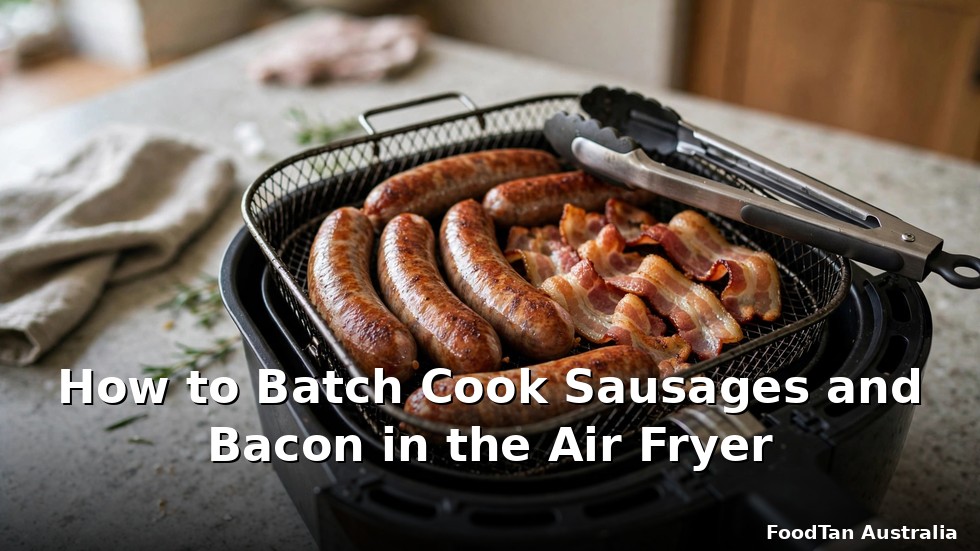
How to Batch Cook Sausages and Bacon in the Air Fryer
Learning how to batch cook sausages and bacon in the air fryer changes the economics of breakfast. A proper cooked brekkie at a café runs $18–$25 in most Australian cities; the same plate made at home from a Sunday batch costs a few dollars (estimates — café prices vary wildly). And the air fryer does it with no spattering fat across the stovetop, no smoky kitchen, and bacon that stays flat and crisp instead of curling into sad little tubes.
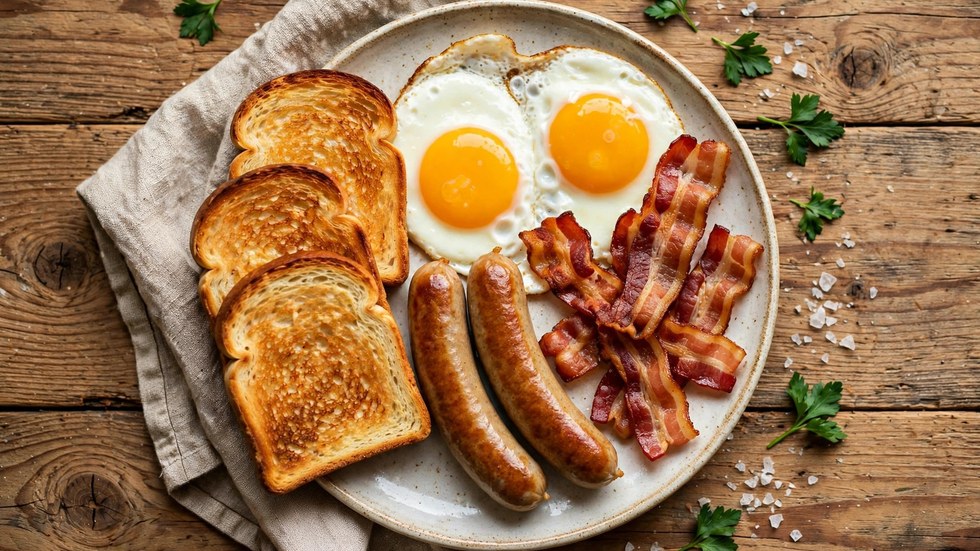
This isn’t about eating snags and bacon every day — it’s about having them ready. A container of cooked sausages and bacon in the fridge means a hot breakfast in three minutes on a workday, sausage sandwiches for the kids’ lunchboxes, and bacon to crumble over salads, pastas and jacket potatoes all week.
Key Takeaways
- Sausages: 180°C for 12–15 minutes, turning once — no oil needed.
- Bacon: 180°C for 7–10 minutes depending on thickness and how crisp you like it.
- Cook sausages and bacon in separate batches for the best texture on both.
- Line the basket or use a drip tray — snags and bacon release a lot of fat.
- Cooked sausages and bacon keep 3–4 days in the fridge; reheat in the air fryer in 3 minutes.
Why the Air Fryer Wins for Snags and Bacon
The frypan method has two problems: spatter and uneven cooking. Bacon curls, sausages burst, and you’re left wiping fat off every nearby surface. In the air fryer, the circulating heat cooks from all sides at once. Bacon lies flat (especially if you give the rashers a little twist), sausages brown evenly without splitting, and all the rendered fat drips below the food instead of the meat sitting in it.
There’s also the batch factor. A frypan fits four snags; a decent air fryer basket fits eight to ten. When you’re cooking for the week rather than for one breakfast, that capacity difference is everything.
Sausages: The Method
- Choose good snags. Thick beef, pork, or chicken sausages all work. Cheap sausages with high water content shrink dramatically and spit — spending a little more per kilo (estimates vary) genuinely pays off here.
- Don’t prick them. Old advice, bad idea. Pricking lets the juices escape and gives you dry sausages. The air fryer’s even heat means bursting is rare.
- Preheat to 180°C for 3 minutes.
- Arrange in a single layer with small gaps. Eight thick snags is a comfortable batch in a standard basket.
- Cook 12–15 minutes, turning once at the halfway mark.
- Check they’re cooked through — juices should run clear, or use a thermometer: 71°C for pork, 74°C for chicken sausages.
Bacon: The Method
- Pick your cut. Middle rashers give you the classic streaky-meaty combo; shortcut bacon is leaner and cheaper. Both crisp well.
- Lay rashers in a single layer. They can overlap slightly — they’ll shrink as they cook — but don’t pile them.
- Preheat to 180°C for 3 minutes.
- Cook 7–10 minutes. Thin shortcut bacon is done around 7 minutes; thick-cut middle bacon needs closer to 10. No flipping required, though a turn halfway gives extra-even crispness.
- Drain on paper towel for a minute before packing away. This wicks off surface fat and keeps the bacon crisp.
Batch Cook Timing Chart
| Item | Temp | Time | Notes |
|---|---|---|---|
| Thick beef/pork snags | 180°C | 12–15 min | Turn halfway; 71°C internal |
| Chicken sausages | 180°C | 12–14 min | 74°C internal; don’t overcook |
| Thin breakfast sausages | 180°C | 8–10 min | Watch closely after 8 min |
| Shortcut bacon | 180°C | 7–8 min | Crisp; drain on paper towel |
| Middle bacon (thick) | 180°C | 9–10 min | Turn halfway for evenness |
| From frozen snags | 180°C | 18–22 min | Turn twice; check temp |
The Sunday Batch Sequence
Here’s the efficient order for a full breakfast batch in under 40 minutes:
- Batch 1 — sausages (15 min): Load the basket with snags and start them first since they take longest.
- Batch 2 — bacon (10 min): While snags rest, cook the bacon. Tip out the drip tray between batches.
- Batch 3 — more snags or eggs (optional): If you’re feeding a crowd, run a second sausage batch. Or crack the boiled-egg hack from our other guide into the rotation.
Total active time is about 10 minutes — the rest is the air fryer doing its thing while you pack containers or make a coffee.
Storage and Reheating
Cool everything completely before refrigerating — packing hot meat creates condensation and soggy bacon. Store in airtight containers, ideally with a sheet of paper towel under the bacon to absorb moisture. They’ll keep 3–4 days below 5°C.
Reheating is where the air fryer earns its keep again: 3 minutes at 180°C brings sausages back to juicy and bacon back to crisp. The microwave works in a pinch (60–90 seconds) but the bacon goes chewy rather than crisp. For sausage sandwiches, slice cold snags lengthwise and griddle them cut-side down in a hot pan for 30 seconds — maximum caramelisation, minimum effort.
What to Do With a Week of Snags and Bacon
- Sausage and egg muffins: split snag, fried or air fryer egg, cheese, English muffin. Faster than the drive-through.
- Bacon and egg rolls: the great Aussie hangover cure and tradie staple.
- Sausage pasta: squeeze snag meat from casings into a tomato sauce — instant flavour base.
- Bacon fried rice: chop and toss through with peas, corn and soy.
- Loaded jacket potatoes: crumbled bacon, sour cream, cheese.
- Curried sausages: slice cooked snags into a simple curry sauce with rice — a retro classic.
- Lunchbox wraps: cold sliced sausage, salad and chutney in a wrap.
Cost Breakdown
A kilo of decent sausages on special might run $8–$12 (estimate), giving you 10–12 thick snags — under $1 each. A 500g pack of shortcut bacon is often $5–$7 on special (estimate), or about 50–70 cents a rasher. A café big breakfast at $22 buys you roughly a week of home breakfasts from one batch session. The maths isn’t close.
Buy snags and bacon when they’re marked down and freeze them. They freeze perfectly for 2–3 months, and you can cook from frozen using the timing chart above — just add a few minutes and check internal temps.
Australian Meal Prep & Macro Estimator
Pop in your costs in $ AUD and get per-portion cost, macros and storage guidance.
Fat Management and Cleanup
Snags and bacon release a surprising amount of fat. If your air fryer has a removable drip tray, empty it between batches — pooled fat can smoke at high temperatures. A sheet of baking paper with holes punched in it, or a silicone liner made for air fryers, catches most of the drips and makes cleanup a quick wipe instead of a scrub.
Don’t pour the rendered fat down the sink. Let it cool, pour into an old jar, and bin it — or save bacon fat in a jar in the fridge for roasting potatoes. Your grandmother wasn’t wrong about that one.
Food Safety
Sausages must be cooked through — no pink in the middle, juices running clear. Chicken sausages in particular need 74°C internal. Refrigerate within two hours of cooking, reheat until steaming hot, and don’t reheat more than once. Standard stuff, but worth saying.
Mastering the air fryer breakfast sausage batch cook is pure meal-prep leverage: 40 minutes on Sunday, hot breakfasts all week, and a fridge full of versatile protein. Your future self — the one running late on Thursday morning — will thank you.
You May Also Like
Air Fryer vs Oven Energy Costs in Australia: How Much Do You Save?
Crispy Air Fryer Chickpeas: Low-Fat High-Protein Crunchy Snack