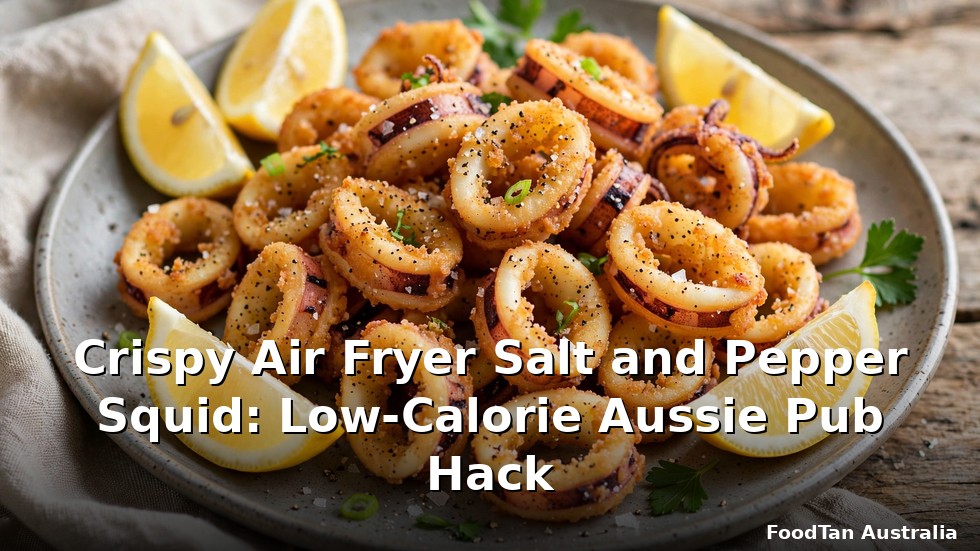
Crispy Air Fryer Salt and Pepper Squid: Low-Calorie Aussie Pub Hack
- Air fryer salt and pepper squid cooks in 8–10 minutes at 200°C with just a spray of oil.
- Score the squid tubes in a crosshatch and pat very dry — that’s what gives you curl and crunch.
- A light cornflour coating beats heavy batter: crispy outside, tender inside, far fewer calories.
- Homemade costs roughly $3–$4 per serve vs $16–$22 for a pub serve (estimates).
- Cook in a single layer and don’t walk away — squid goes from perfect to rubbery in under a minute.
Salt and pepper squid is one of the great Aussie pub classics — golden, crunchy, dangerously moreish, and usually priced at $16 to $22 a plate. But the traditional version is deep-fried, which means a pot of hot oil, a smoky kitchen, and a calorie bomb. This air fryer salt and pepper squid recipe keeps everything you love about the pub version — the shattering crust, the peppery bite, the squeeze of lemon — with a fraction of the oil and none of the deep-fryer drama.
It also happens to be brilliant for meal prep. Squid is lean, high in protein, and cheap when you buy it frozen. A bag of squid tubes from the freezer section, a $2 bag of cornflour, and a well-stocked spice rack is all you need. Let’s get into it.
Choosing Squid in Australia (Without Overpaying)
You’ll find squid in a few forms at Coles, Woolworths, Aldi, and Asian grocers:
- Frozen squid tubes: The budget champion. Usually $10–$14 per kilo (estimates), cleaned and ready to go. Thaw in the fridge overnight or in cold water for 30 minutes.
- Whole frozen squid: Even cheaper per kilo, but you have to clean them — pull out the quill, remove the head and innards, peel the skin. Worth it if you’re feeding a crowd.
- Fresh squid tubes from the fishmonger: Lovely, but often $20+/kg. Save these for a special occasion, not a Tuesday night.
- Squid rings (crumbed, frozen): Convenient, but you’re paying for breadcrumb and they’re designed for the oven. Plain tubes give you far better results in the air fryer.
For this recipe, frozen tubes around 10–15cm long are ideal. They’re uniform, they curl beautifully when scored, and they cook evenly. Asian grocers often have the best prices — check the freezer aisle before you pay supermarket prices.
Prep: The Crosshatch That Makes It Pub-Worthy
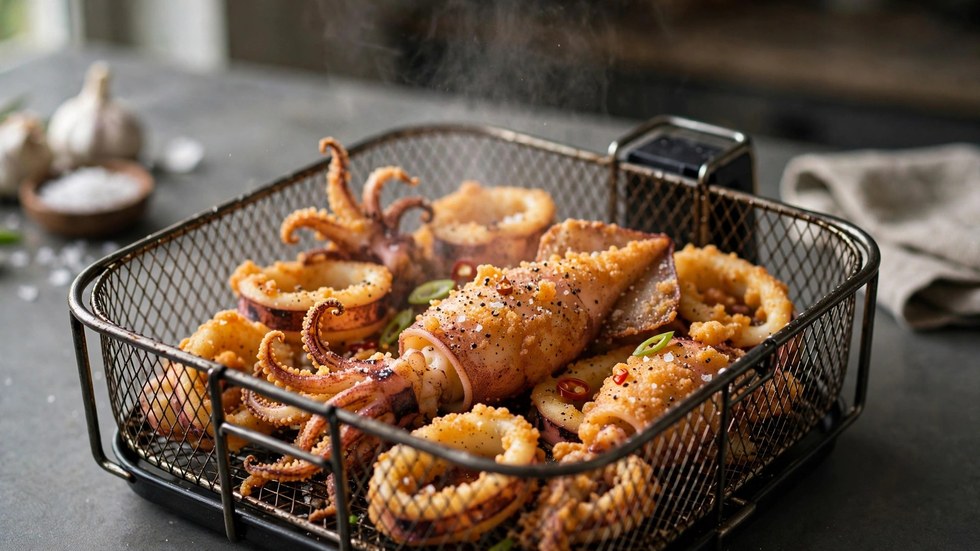
Pub squid has those attractive curled edges and the scored diamond pattern. It’s not just for looks — scoring helps the coating cling and lets heat penetrate quickly so the squid cooks before it can toughen.
- Thaw completely and rinse the tubes under cold water. Drain well.
- Pat very dry with paper towel, inside and out. Moisture is the enemy of crispness — this step matters more than anything else.
- Open each tube flat with a sharp knife (one slit down the side), then lay it skin-side down.
- Score a crosshatch — shallow diagonal cuts about 5mm apart in both directions, cutting about two-thirds of the way through. Don’t cut all the way through or you’ll have strips instead of a sheet.
- Cut into pieces roughly 5cm square. They’ll curl as they cook.
If your tubes came with tentacles, keep them — scored lightly and cooked the same way, they’re the crispiest, most delicious bits in the basket.
The Coating: Light, Crispy, Low-Calorie
Forget wet batters. Pub-style crunch at home comes from a dry dredge, and cornflour (cornstarch) is the star. It fries up glass-crisp in the air fryer and stays light, where plain flour can go a bit doughy.
For 500g of prepared squid, toss together in a large bowl:
- ⅓ cup cornflour
- 1 teaspoon sea salt flakes
- 1½ teaspoons cracked black pepper (coarse is best)
- ½ teaspoon white pepper (optional, but very pub-authentic)
- ½ teaspoon garlic powder
- ¼ teaspoon chilli flakes or cayenne (optional)
Add the dried squid pieces and toss thoroughly until every piece is dusted. Shake off the excess — you want a whisper of coating, not a thick jacket. Then spray or drizzle lightly with oil (about 1–2 teaspoons total). Rice bran oil or light olive oil in a spray bottle works brilliantly.
Why not just use flour?
You can, but cornflour gives a noticeably crisper, more delicate crust that stays crunchy longer. A 50/50 mix of cornflour and rice flour is the gold standard if you happen to have both — rice flour is a staple in Asian grocers for under $2 a bag.
Cooking: 200°C, Single Layer, No Wandering Off
Preheat your air fryer to 200°C for 3 minutes. Arrange the coated squid in a single layer with small gaps — overlap causes steaming, and steamed squid is rubbery squid. You’ll likely need two batches for 500g; that’s fine, each batch is quick.
- Cook at 200°C for 4 minutes.
- Shake the basket or flip pieces with tongs, spray very lightly with oil again.
- Cook for a further 3–4 minutes until golden, curled, and crisp at the edges.
- Tip onto a plate, shower with extra salt, pepper, and sliced spring onion. Serve immediately with lemon wedges.
Total active cooking time: 8–10 minutes per batch. The squid is done when it’s opaque, curled, and golden — if it’s still translucent in the centre, give it one more minute. But watch it like a hawk past the 8-minute mark; squid proteins tighten fast.
Air Fryer Salt and Pepper Squid: Timing Chart
| Squid form | Temp | Time | Notes |
|---|---|---|---|
| Scored tubes, 5cm pieces | 200°C | 7–9 min | The classic; shake at 4 min |
| Whole small tubes (unscored) | 200°C | 8–10 min | Turn once; less curl, still crisp |
| Tentacles | 200°C | 6–8 min | Cook separately; they crisp fastest |
| Rings (1cm thick) | 200°C | 6–8 min | Great for tacos and poke bowls |
| From frozen (thaw first!) | — | — | Always thaw; frozen squid weeps water and won’t crisp |
Serving Ideas: Beyond the Pub Plate
The classic serve — piled on a plate with lemon, spring onion, and maybe a little kewpie mayo or sweet chilli sauce — is hard to beat. But this squid is a meal-prep weapon beyond the pub imitation:
- Squid tacos: Warm tortillas, shredded cabbage, kewpie mayo, and a squeeze of lime. Two tacos make a solid lunch.
- Poke-style bowls: Over sushi rice with edamame, cucumber, and pickled ginger. The crispy squid replaces raw fish for a cooked alternative.
- Noodle stir-through: Toss just-cooked squid through hokkien noodles with bok choy and oyster sauce.
- Asian salad: On a bed of mixed leaves with mango, mint, and a fish-sauce-lime dressing.
One honest caveat for meal prep: squid is best eaten fresh from the air fryer. It keeps in the fridge for 2 days and reheats acceptably (3 minutes at 200°C brings back much of the crunch), but it will never be quite as shattering as minute one. Plan squid nights for cook day, and prep your chicken or beef for the later in the week.
Cost Breakdown: Pub vs Homemade
| Item | Homemade (500g batch, ~3 serves) | Est. cost (AUD) |
|---|---|---|
| Frozen squid tubes | 500g @ ~$12/kg | $6.00 |
| Cornflour & seasonings | Pantry staples | $0.50 |
| Oil spray | ~2 tsp | $0.15 |
| Lemon & spring onion | To serve | $0.80 |
| Electricity | ~15 min air fryer | $0.10 |
| Total / per serve | 3 generous serves | ~$7.55 / ~$2.50 |
Australian Meal Prep & Macro Estimator
Pop in your costs in $ AUD and get per-portion cost, macros and storage guidance.
Compare that with $16–$22 for a single pub serve (estimates vary by venue), and homemade air fryer salt and pepper squid costs roughly a seventh of the pub price. Even if you factor in your time, it’s one of the highest-value swaps in the Aussie home-cooking playbook. Plug your local squid price into the calculator to see your own numbers.
Troubleshooting: When Squid Goes Wrong
It’s rubbery
Almost always overcooked or cooked from too-wet squid. Next time: pat drier, cook hotter (200°C, not 180°C), and pull it a minute earlier. Remember carryover heat keeps cooking it for a minute off the heat.
The coating won’t stick
The squid was too wet, or you skipped the drying step. Paper towel is non-negotiable. Also, don’t dredge until the air fryer is preheated and ready — coated squid sitting around weeps moisture and the coating slides off.
It’s not crispy enough
Three likely culprits: overcrowded basket (cook in batches), not enough preheat, or too-thick coating. Shake off excess dredge aggressively — you should barely see it.
It sticks to the basket
Give the basket a light spray of oil before adding the squid, and make sure the air fryer is fully preheated. A hot basket sears on contact instead of gluing.


You May Also Like
Air Fryer Turkey Burgers: High-Protein Meal Prep Bowls

Crispy Air Fryer Chickpeas: Low-Fat High-Protein Crunchy Snack