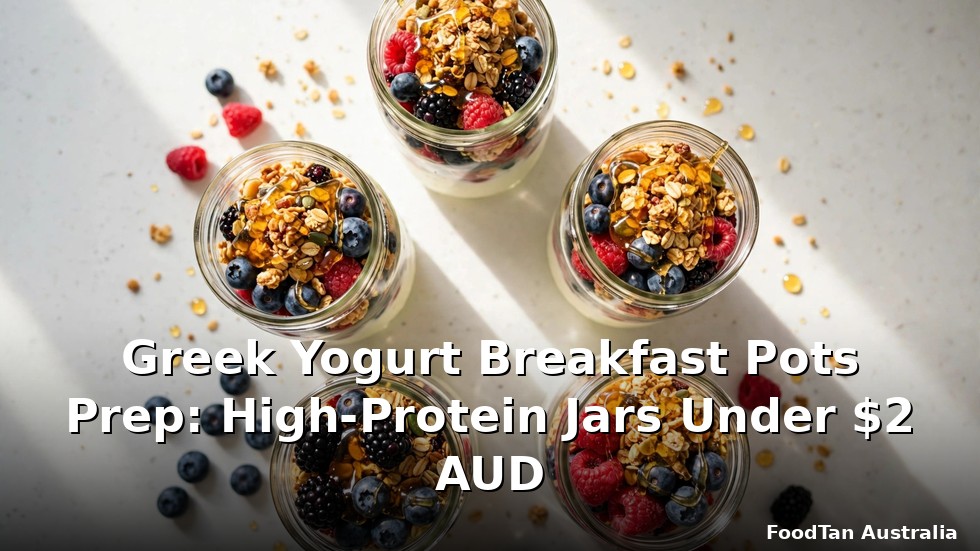
Greek Yogurt Breakfast Pots Prep: High-Protein Jars Under $2 AUD
- Five breakfast pots for under $10 AUD total — roughly $1.60–2.00 each (estimates from Coles, Woolworths and Aldi).
- Each pot delivers approximately 20–25g of protein with no cooking required.
- Chobani Greek yoghurt is used as an example of widely available high-protein yoghurt — any plain Greek-style yoghurt works.
- Pots keep 4–5 days refrigerated; granola stays crunchy when packed separately or layered on top.
- Seven flavour combinations below, all assembled in under 20 minutes on a Sunday night.
Some mornings you need breakfast to be a grab-and-open situation — no cooking, no blending, no decisions. Greek yogurt breakfast pots prep is the lowest-effort meal prep that exists: yoghurt, fruit, and something crunchy layered in a jar, made five at a time in about fifteen minutes. At under two dollars each with more than 20 grams of protein, they beat every café breakfast and most cereals on both cost and nutrition.
Chobani gets the headline here because it’s the Greek yoghurt most Australians reach for — widely stocked, consistently thick, and regularly half-price at Coles and Woolworths, when a 1kg tub drops to around $5–6. But the method works with any plain Greek-style yoghurt: Woolworths’ own brand, Jalna, Farmdale from Aldi. Buy whatever’s on special; the protein content across plain Greek yoghurts is broadly similar, roughly 8–10g per 100g.
The Formula: Yoghurt + Fruit + Crunch + Flavour
Every good breakfast pot follows the same architecture. Get the ratios right and you can’t go wrong:
- 200g Greek yoghurt — the protein base. Plain, not flavoured; flavoured yoghurts carry a lot of added sugar and cost more per kilo.
- ½ cup fruit — fresh berries when cheap, frozen berries (thawed) the rest of the year, diced mango, banana, or tinned peaches in juice, drained.
- ⅓ cup crunch — granola, untoasted muesli, crushed Weet-Bix, or a handful of nuts and seeds. This is what makes it feel like breakfast rather than a snack.
- 1 teaspoon flavour — honey, maple syrup, peanut butter, cocoa, cinnamon, vanilla. Small amounts, big impact.
The crunch rule is the one that matters most for meal prep: keep granola and muesli separate or on the very top until you’re ready to eat, or pack it in a small container alongside. Mixed through wet yoghurt on Sunday, it’s mush by Tuesday.
Cost Breakdown: Five Pots
| Ingredient | Quantity for 5 Pots | Est. Cost (AUD) |
|---|---|---|
| Plain Greek yoghurt (e.g. Chobani) | 1kg tub | $6.00 |
| Frozen mixed berries | 500g bag (use ~300g) | $2.50 |
| Untoasted muesli or granola | ~250g | $2.00 |
| Honey | 5 teaspoons (pantry) | $0.75 |
| Total for 5 pots | $11.25 | |
| Per pot | $2.25 |
Buy the yoghurt on special — which happens constantly — and use home-brand muesli, and the batch drops under $9, or $1.80 per pot. All prices are estimates.
Australian Meal Prep & Macro Estimator
Pop in your costs in $ AUD and get per-portion cost, macros and storage guidance.
Seven Flavour Combinations
1. Classic Berry and Honey
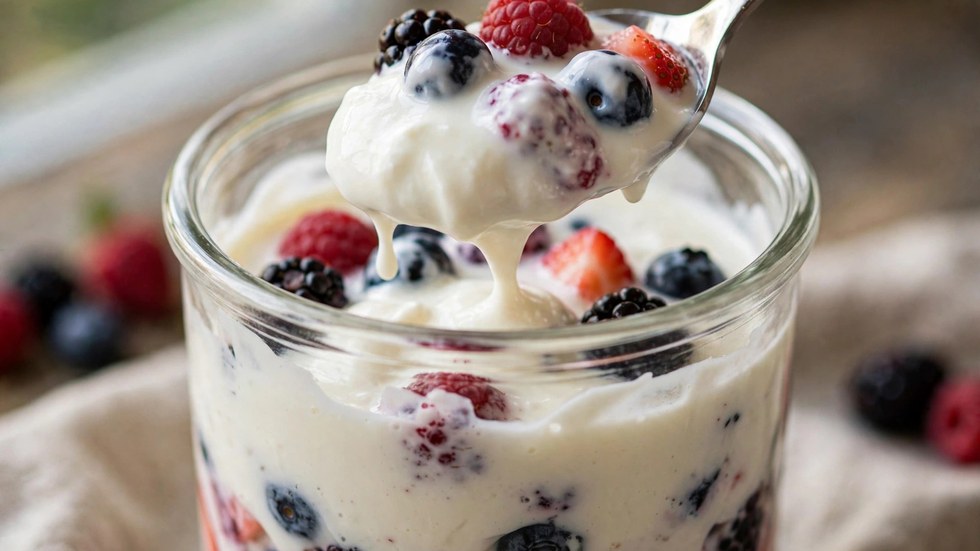
The benchmark. Yoghurt, thawed mixed berries, muesli on top, honey drizzled over. The berry juice bleeds into the yoghurt overnight and turns it pink — this is a feature, not a bug. Approximately 22g protein, $1.80 per pot.
2. Peanut Butter and Banana
A tablespoon of peanut butter swirled through the yoghurt, sliced banana, crushed Weet-Bix or granola, and a drizzle of honey. Tastes like dessert, eats like breakfast. Slice the banana the night before and toss in lemon juice to slow browning — or just accept slightly brown banana by day three, which tastes fine. Approximately 24g protein, $1.90 per pot.
3. Mango and Coconut
Diced mango (frozen mango chunks, thawed, are cheap and excellent), a tablespoon of desiccated coconut stirred through the yoghurt, muesli on top. Summer in a jar. Approximately 21g protein, $2.00 per pot.
4. Apple Pie Pot
Diced apple tossed with cinnamon, a spoonful of sultanas, yoghurt, and crushed plain biscuits or granola. The cinnamon-apple combination genuinely tastes like pie filling. Use Granny Smiths for tartness. Approximately 20g protein, $1.70 per pot — the cheapest of the lot.
5. Choc-Peanut Protein Pot
A teaspoon of cocoa powder and a tablespoon of peanut butter whisked into the yoghurt until smooth, sliced banana, granola. For the person who wants breakfast to taste like a treat. Approximately 25g protein, $2.00 per pot.
6. Tinned Peach and Almond
Tinned peach slices in juice (drained well — juice makes everything watery), a handful of flaked almonds, yoghurt, honey. The retro option that absolutely holds up. Approximately 22g protein, $1.85 per pot.
7. Bircher-Style Overnight Pot
The hybrid: mix ¼ cup rolled oats directly into the yoghurt with grated apple, sultanas and cinnamon, and refrigerate overnight. The oats soften into a bircher muesli texture. Top with fresh or thawed berries in the morning — or pack them on top from the start; they hold up fine. Approximately 21g protein, $1.60 per pot.
Approximate Nutrition: The Classic Berry Pot
| Nutrient | Per Pot (approx) |
|---|---|
| Calories | 380 |
| Protein | 22g |
| Carbohydrates | 52g |
| Fat | 8g |
| Fibre | 6g |
All figures are approximate and vary with the yoghurt brand and toppings used.
Greek Yogurt Breakfast Pots Prep: The 15-Minute Sunday Assembly Line
Line up five jars or containers. Spoon 200g of yoghurt into each — a kitchen scale makes this fast, or just eyeball a generous cup. Add the fruit to each jar. If you’re doing multiple flavours, this is where the assembly line pays off: berries in two, banana in two, mango in one. Drizzle the flavour element (honey, peanut butter) over the top. Lid the jars. Put the crunch component — muesli, granola, nuts — into five small separate containers or zip-lock bags.
That’s it. Fifteen minutes, five breakfasts, no cooking, one spoon to wash. In the morning, tip the crunch on top and eat straight from the jar. It genuinely takes less time than making toast.
How Long Do They Keep?
Yoghurt pots are among the hardiest meal preps. Sealed and refrigerated at or below 4°C, they’re good for 4–5 days. The yoghurt’s acidity keeps things fresh, and most fruits hold up fine submerged. Two caveats: banana browns after day two (still safe, just less pretty — lemon juice helps), and the bircher-style oat version is best within 3 days before the oats go overly soft.
Use jars with proper sealing lids — old jam jars, mason jars, or the glass containers with locking lids. Yoghurt absorbs fridge odours enthusiastically, so a good seal matters more here than with most preps. Don’t store them next to last night’s leftover curry unless you want curried breakfast.
Pushing the Protein Higher
Twenty-two grams is solid for most people, but if you’re chasing bigger numbers:
- Add a tablespoon of peanut butter: +4g protein, though it also adds meaningful calories.
- Stir through 2 tablespoons of LSA or hemp seeds: +3–4g protein plus omega-3s and fibre.
- Use a high-protein yoghurt variant: Some brands sell higher-protein Greek yoghurts at 12–15g per 100g — check the label and compare the per-kilo price.
- Top with chopped almonds or walnuts: +3g protein per small handful, plus crunch that actually stays crunchy.
- Pair with a boiled egg on the side: +6g protein for about 40 cents. Not traditional, but effective.
A pot with peanut butter, hemp seeds and almonds pushes past 30g of protein — serious numbers for something that took three minutes to assemble.
Dairy-Free and Budget Swaps
Greek yoghurt is not cheap at the best of times, and if someone in the house cannot do dairy, the standard formula needs rethinking. The good news: the breakfast-pot method survives almost any substitution.
Coconut yoghurt: The thickest of the plant-based options and the closest in texture to Greek yoghurt. Protein is lower — typically 3–4g per 100g — so add hemp seeds or peanut butter to compensate. Prices vary wildly between brands, so compare the per-kilo sticker at Coles or Woolies before committing.
Soy yoghurt: The best protein match among dairy-free options, usually 5–6g per 100g. Flavour is milder, which actually suits fruit toppings well. Look for unsweetened versions; the sweetened ones can hide a surprising amount of sugar.
Regular plain yoghurt, strained at home: If Greek yoghurt’s price stings, buy a large tub of plain natural yoghurt and strain it through a clean chux cloth over a bowl in the fridge overnight. You lose about a third of the volume as whey, but the result is thick, tangy, and noticeably cheaper per kilo than the Greek tub on the shelf. Save the whey for smoothies — it is full of protein and would otherwise go down the sink.
Frozen fruit instead of fresh: Berries in particular are cheaper frozen, available year-round, and nutritionally identical. Add them to the pot frozen the night before; by morning they have thawed into a natural syrup that does the job of honey. A 1kg bag of frozen mixed berries from Aldi is one of the best-value breakfast ingredients in the country.
Weet-Bix as the crunch: Granola is a luxury line item. Crushed Weet-Bix with a drizzle of honey and a few pepitas gives the same crunch-and-fibre role for a fraction of the cost. It goes soggy faster than granola, so add it in the morning, not the night before.
None of these swaps compromise the core idea: protein-rich base, fruit, crunch, flavour, assembled in minutes. The pots stay under $2 either way — the calculator above will tell you exactly where yours land.
You May Also Like
10 Cheap High Protein Lunch Bowls Australia Under $3.50 AUD Per Portion
Egg Muffin Cups Meal Prep: A Budget Veggie Bake for Busy Mornings