
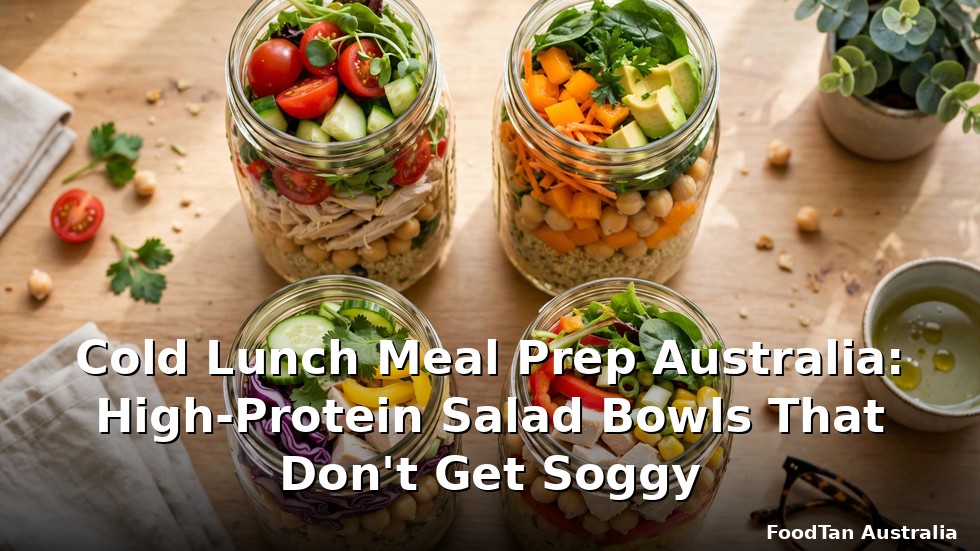
Cold Lunch Meal Prep Australia: High-Protein Salad Bowls That Don’t Get Soggy
- The dressing-on-the-bottom layering method keeps salad bowls crisp for 4 full days — the single most important technique in this guide.
- Each bowl delivers 30g+ of protein for roughly $2.50–$3.40 AUD per portion (estimates; specials lower this).
- Sturdy bases — shredded cabbage, kale, barley, chickpeas — survive the week; delicate lettuce does not.
- Eight complete bowl recipes below, all designed to be eaten cold with no microwave needed.
- A $30 Sunday shop covers ten cold lunches: two recipes, five portions each.
There is a special kind of disappointment in opening your lovingly prepped salad at 12:30 on a Wednesday and finding a limp, weeping pile of leaves. Cold lunch meal prep Australia-wide has a sogginess problem, and it’s the reason so many people give up on salads by week two and go back to the $16 café wrap. The fix isn’t complicated — it’s a packing method, a choice of sturdier ingredients, and knowing which components to keep separate until the last minute.
This guide covers eight high-protein salad bowls built for the office fridge, the worksite esky, or the uni bag. Every one of them is designed to be eaten cold, holds up for days, and costs a fraction of buying lunch. No reheating, no microwave queues, no sad desk salad.
The Anti-Soggy Method: Layer Like You Mean It
Sogginess has one cause: moisture sitting on delicate leaves for hours. Dressing, tomato juice, cucumber water — it all migrates downward and turns lettuce to mush. The solution used by every serious meal prepper is layering, and it works whether you use mason jars, glass containers or plain old Tupperware.
The order, from bottom to top:
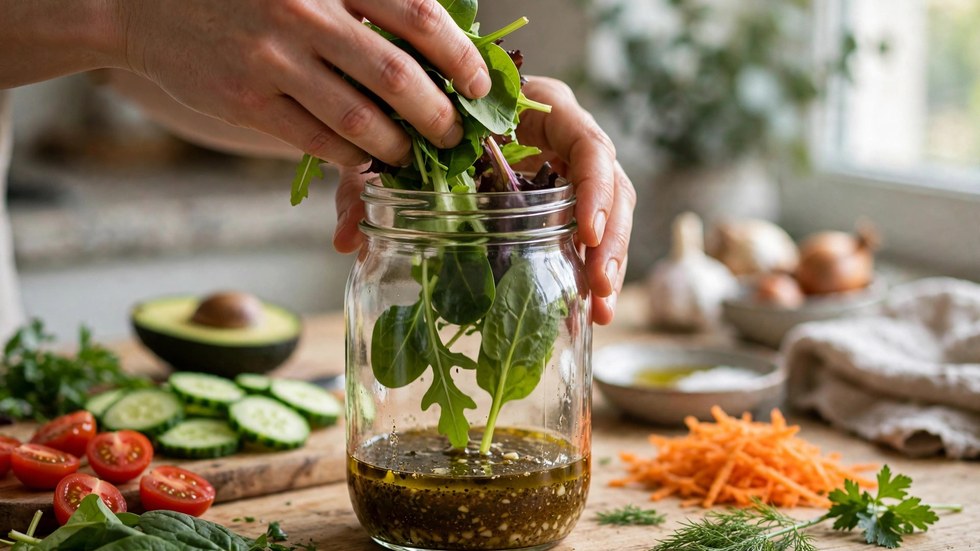
- Dressing on the very bottom. Two to three tablespoons. It stays sealed away from everything delicate.
- Hard, moisture-proof layer. Chickpeas, diced carrot, corn, beans, or grains like barley and quinoa. This is the barrier.
- Protein. Chicken, tuna, eggs, or marinated tofu sit happily on the barrier layer.
- Sturdy veg. Capsicum, cucumber, shredded cabbage, cherry tomatoes (halved, cut side up so they don’t leak down).
- Delicate greens on top. Baby spinach, rocket or mixed leaves go last, furthest from the dressing.
When it’s time to eat, tip the whole thing into a bowl (or shake the jar) and the dressing coats everything evenly. Four days later, the greens on top are still crisp because they’ve never touched liquid. It genuinely works — this is the difference between a salad that lasts and one that doesn’t.
Pick Ingredients That Survive the Week
Not all salad ingredients are equal in a meal prep context. Build your bowls from the sturdy list and treat the delicate list as day-one-or-two additions.
| Lasts 4–5 Days | Lasts 1–2 Days (add fresh) | Avoid for Prep |
|---|---|---|
| Shredded cabbage, kale (massaged) | Baby spinach, rocket | Iceberg (goes limp fast) |
| Carrot, capsicum, corn | Cucumber (salt it first) | Sliced apple (browns) |
| Chickpeas, black beans, butter beans | Avocado (brown, add daily) | Fresh herbs (wilt) |
| Barley, quinoa, couscous | Cherry tomatoes (whole) | Soft cheese (weeps) |
| Hard-boiled eggs (shelled in container) | Feta (fine 2–3 days) | Croutons (add fresh) |
Kale deserves a special mention: massage it with a teaspoon of olive oil and a pinch of salt for a minute before packing, and it softens into something genuinely pleasant that keeps for days. Raw, unmassaged kale in a day-four container is a punishment.
The 8 Bowls
1. Smoked Chicken and Barley Crunch Bowl
A $10–12 hot chook from Woolies or Coles, shredded, stretches across five portions when it’s not the only protein. Combine with cooked pearl barley, shredded red cabbage, grated carrot, corn and a honey-mustard dressing (olive oil, Dijon, honey, apple cider vinegar). The barley drinks up the dressing at the bottom of the container and tastes better for it.
Cost: roughly $3.10 per portion. Protein: approximately 34g.
2. Tuna and White Bean Mediterranean Bowl
Two tins of tuna, a tin of cannellini beans, diced capsicum, red onion, cucumber and olives over massaged kale, with a lemon-oregano dressing. This is the bowl that tastes like a holiday and costs less than a coffee. The beans and tuna are the moisture barrier; the kale sits on top and stays perfect.
Cost: roughly $2.70 per portion. Protein: approximately 33g.
3. Egg and Chickpea Curried Bowl
Boiled eggs are the cheapest protein in the supermarket, and curry spices make them interesting. Toss a tin of chickpeas with curry powder, roast 15 minutes until crisp-edged, and pack with shredded cabbage, grated carrot, sultanas and a yoghurt-curry dressing (Greek yoghurt, curry powder, lemon juice). Add two boiled eggs per portion. Sweet, crunchy, filling.
Cost: roughly $2.20 per portion. Protein: approximately 30g.
4. Satay Beef and Slaw Bowl
Leftover roast beef or cheap rump steak, sliced thin, over a crunchy slaw of shredded cabbage, carrot and spring onion with a peanut-satay dressing. The slaw actually improves over two days as it lightly pickles in the dressing — but keep the beef on the barrier layer, not mixed through, so it doesn’t go grey. If steak is too dear that week, use shredded chicken thigh instead.
Cost: roughly $3.40 per portion. Protein: approximately 36g.
5. Mexican Black Bean and Corn Bowl
A tin of black beans, a tin of corn, diced capsicum, red onion and cherry tomatoes over shredded cos, with a lime-cumin dressing and a spoonful of Greek yoghurt packed separately. Add a boiled egg or some shredded chicken to push the protein up. The beans make this one of the most filling bowls here despite the low cost.
Cost: roughly $2.50 per portion. Protein: approximately 30g (34g with chicken).
6. Greek Barley and Chicken Bowl
The cold cousin of the warm Greek bowl: pearl barley, diced cucumber, cherry tomatoes, red onion, olives and lemon-oregano chicken thigh, with crumbled feta added on day of eating (it keeps 2–3 days packed, but it’s best fresh). A spoonful of tzatziki or plain Greek yoghurt on the side ties it together.
Cost: roughly $3.20 per portion. Protein: approximately 35g.
7. Vietnamese-Style Chicken and Noodle Bowl
Rice vermicelli noodles (a 250g pack is a couple of bucks and makes five portions), shredded poached or roast chicken, grated carrot, cucumber ribbons, bean sprouts and fresh mint, with a nuoc cham-style dressing of fish sauce, lime juice, sugar and chilli. Pack the herbs and sprouts on the very top and add them fresh-ish — they’ll do two days, then refresh from a $2 bag.
Cost: roughly $2.90 per portion. Protein: approximately 33g.
8. Salmon and Quinoa Power Bowl (the fortnightly treat)
Tinned salmon — not fresh — keeps this affordable. A 415g tin split across five portions with cooked quinoa, edamame (frozen, thawed), shredded cabbage and a soy-ginger dressing. It sounds fancy; it costs less than most of the chicken bowls. Tinned salmon regularly goes on special, so stock up when it does.
Cost: roughly $3.30 per portion. Protein: approximately 35g.
What a $30 Week Looks Like
Pick any two bowls — say the tuna and white bean plus the egg and chickpea curried — and the shop is modest. All prices are estimates.
| Item | Est. Cost (AUD) |
|---|---|
| Tinned tuna (2 large tins) | $5.00 |
| Tinned beans and chickpeas (3 tins) | $3.60 |
| Dozen eggs | $5.50 |
| Kale, cabbage, carrots, capsicum, onion | $8.00 |
| Olives, lemons, curry powder (per-use pantry) | $2.50 |
| Olive oil, vinegar (per-use pantry) | $1.50 |
| Total for 10 portions | $26.10 |
| Per portion | $2.61 |
Australian Meal Prep & Macro Estimator
Pop in your costs in $ AUD and get per-portion cost, macros and storage guidance.
Dressings: Make Five, Thank Yourself Later
Bottled dressings are expensive and full of stuff you don’t need. These five take two minutes each in a jar with a lid — just shake. Each recipe makes enough for five portions (about ¾ cup).
- Honey-mustard: ¼ cup olive oil, 2 tbsp apple cider vinegar, 1 tbsp Dijon, 1 tbsp honey, salt, pepper.
- Lemon-oregano: ¼ cup olive oil, juice of 2 lemons, 1 tsp dried oregano, 1 crushed garlic clove.
- Yoghurt-curry: ½ cup Greek yoghurt, 2 tsp curry powder, squeeze of lemon, pinch of salt.
- Peanut-satay: ¼ cup peanut butter, 2 tbsp soy sauce, 1 tbsp sriracha, warm water to thin.
- Soy-ginger: 3 tbsp soy sauce, 2 tbsp rice vinegar, 1 tbsp sesame oil, 1 tsp grated ginger, 1 tsp honey.
All keep for a week in the fridge. The yoghurt one keeps 4–5 days — make it mid-week if you’re prepping on Sunday.
Cold Lunch Meal Prep Australia: Office Fridge Survival Tips
A few practical notes from years of office lunch experience. Label your containers — not because anyone will steal them (though someone might), but because you’ll forget what’s what by Thursday. Keep a small bottle of hot sauce or a lemon wedge at your desk; a fresh acidic hit on day four makes everything taste newly made.
If your office fridge is unreliable or non-existent, these bowls survive in an insulated lunch bag with a freezer brick until about 1pm, especially the bean and grain-based ones. In summer, don’t push it past that — food safety isn’t negotiable when it’s 38 degrees.
And keep a fork at work. The number of meal prep routines that have died because someone forgot cutlery and gave up is higher than anyone admits.
You May Also Like
Freezer Breakfast Burritos Australia: Batch Prep for Worksite Mornings
High Fiber Batch Cooking Australia: Beans and Greens for Better Digestion