
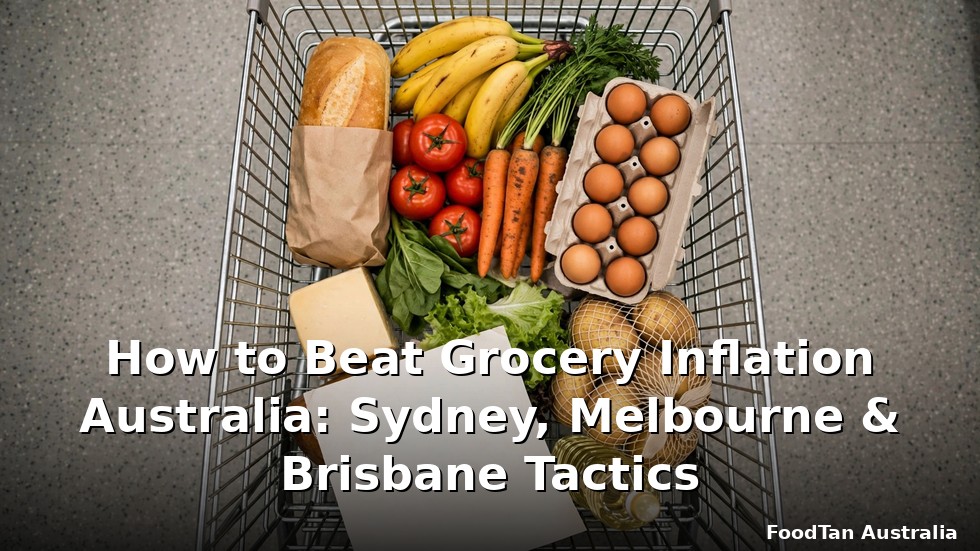
How to Beat Grocery Inflation Australia: Sydney, Melbourne & Brisbane Tactics
Every few months another headline tells you groceries cost more than ever, and every few months your trolley confirms it. The frustration isn’t just the prices — it’s the helplessness. You still have to eat, you still have to shop, and the dockets keep creeping up. But after years of writing about food budgets across this country, I can tell you the shoppers who beat grocery inflation australia-wide aren’t the ones with the most willpower. They’re the ones with the best systems.
This isn’t about clipping coupons like it’s 1998. It’s about how supermarket pricing actually works in Australia’s three biggest cities, and the specific, repeatable tactics that pull your weekly shop back down. FoodTan is editorially independent and not affiliated with or endorsed by Coles, Woolworths, Aldi, or any supermarket chain. All prices are estimates and vary by store, suburb, and season.
Key Takeaways
- Sydney, Melbourne, and Brisbane shoppers face different price pressures — produce is dearest in Sydney, while Brisbane’s shorter supply chains can mean cheaper local fruit and veg.
- The single biggest lever is buying protein only at half-price specials and freezing deep — this alone can cut a meat bill by a third.
- Unit pricing (the small print on the shelf ticket) is the only honest comparison tool in the store. Use it every time.
- Aldi anchors your pantry staples; Coles and Woolworths win on rotating specials; markets and green grocers win on produce — use all three, not just one.
Why the Same Tactics Don’t Work the Same in Every City
It’s tempting to write one national grocery guide, but a shopper in Penrith and a shopper in Toowoomba are playing different games. Sydney’s produce prices run higher because so much of it travels further and retail rents are brutal — that cost lands in the shelf ticket. Melbourne shoppers get the benefit of the city’s massive wholesale market culture; the Queen Vic and Footscray markets genuinely undercut supermarkets on fruit, veg, and smallgoods if you shop late in the day. Brisbane benefits from proximity to Queensland growing regions — in season, pineapples, mangoes, and stone fruit can be genuinely cheap, sometimes half the Sydney price.
The point isn’t that one city has it easy. It’s that your strategy should match your city’s supply lines: Sydney shoppers should lean hardest on specials and Aldi; Melbourne shoppers should add a market run to the routine; Brisbane shoppers should eat aggressively with the Queensland seasons.

Beat Grocery Inflation Australia: The 7 Tactics That Actually Move the Needle
1. Never pay full price for meat — buy the special, freeze the surplus
This is the highest-value habit in Australian grocery shopping, full stop. Coles and Woolworths run roughly half-price specials on mince, chicken, snags, and pork on a rotating cycle every few weeks. When your protein goes half-price, buy two or three times what you need and freeze the rest using the flat-freeze method. Over a year, this habit alone can take a third off a family’s meat spending. The freezer is your time machine: it lets you buy at last month’s price and eat at this month’s convenience.
2. Read the unit price, not the ticket price
That little figure in the corner of the shelf ticket — per 100g, per kilo, per litre — is the only number that tells the truth. The “value pack” is frequently more expensive per kilo than the regular pack. The big tin is sometimes dearer per 100g than the small one. Shrinkflation hides in ticket prices; it can’t hide in unit prices. Make it a reflex: glance at the unit price before anything goes in the trolley.
3. Split your shop across three channels
One-store loyalty is a tax on the lazy. The cheapest weekly shop I can design looks like this: Aldi for pantry staples, dairy basics, and frozen veg; Coles or Woolworths only for that week’s genuine half-price specials; and a market or green grocer for fruit and veg. Nobody has time for four shops a week — but a fortnightly Aldi stock-up plus a weekly specials-and-produce run is very doable.
4. Eat the catalogue, not your cravings
Before you write the shopping list, spend ten minutes with the Coles and Woolworths catalogues (the apps make this painless). Plan the week’s proteins around what’s half-price, not around what you feel like. Chicken half-price? It’s a chicken week: roast, curry, tray bake, fried rice. This one habit turns the supermarkets’ own promotional spending into your discount.
5. Frozen vegetables are not a compromise
Somewhere along the way frozen veg got a reputation as the sad option. It’s nonsense. Frozen peas, corn, spinach, and mixed veg are snap-frozen at peak freshness, cost a fraction of fresh out of season, and generate zero waste because you pour out exactly what you need. A 1kg bag of frozen peas at Aldi for a couple of dollars is one of the great bargains in the entire store.
6. Know your city’s cheap produce windows
Produce prices swing wildly with seasons, and each city has its moments. Brisbane shoppers should load up when Queensland mangoes, pineapples, and avocados are in glut — prices can crater to a dollar or two each. Melbourne’s markets discount heavily in the last hour of trade; a Saturday 2pm Footscray run can fill the crisper for next to nothing. Sydney shoppers should watch for the autumn citrus glut and spring stone fruit, and lean on frozen veg when fresh prices spike in winter.
7. Track one number: your weekly shop total
You can’t beat what you don’t measure. Write down your total grocery spend every week — a notes app is fine. Not a budget, not a spreadsheet, just the number. Shoppers who do this consistently report the same thing: the number starts dropping within a month, because awareness quietly kills the $8 impulse buys that were doing the real damage.
What a Smarter Weekly Shop Looks Like: Sydney vs Melbourne vs Brisbane
Here’s a realistic weekly shop for a family of four, built on the tactics above. Prices are estimates and will bounce around, but the structure is what matters:
| Category | Sydney approach | Melbourne approach | Brisbane approach |
|---|---|---|---|
| Pantry staples | Aldi fortnightly stock-up | Aldi fortnightly stock-up | Aldi fortnightly stock-up |
| Meat (estimate/wk) | ~$45 — specials only, frozen surplus | ~$42 — specials + market butcher | ~$42 — specials only, frozen surplus |
| Fruit & veg (estimate/wk) | ~$40 — frozen + seasonal fresh | ~$32 — market run, late-day discounts | ~$32 — QLD seasonal gluts |
| Dairy & bread | Home brand, Aldi or specials | Home brand, Aldi or specials | Home brand, Aldi or specials |
| Weekly total (estimate) | ~$140–$160 | ~$130–$150 | ~$130–$150 |
The Melbourne and Brisbane totals run a touch lower because both cities have structural produce advantages — markets in one, growing regions in the other. Sydney shoppers close the gap by being ruthless about specials and frozen veg. Plug your own city’s numbers into the calculator and see where you land:
Australian Meal Prep & Macro Estimator
Pop in your costs in $ AUD and get per-portion cost, macros and storage guidance.
The Meal-Prep Angle: Inflation-Proofing Your Freezer
Here’s where this becomes a meal-prep strategy rather than just a shopping strategy. Every time you buy protein at half-price and freeze it, you’re locking in today’s price against next month’s inflation. Every batch of bolognese, curry, or soup you cook from those frozen proteins is a meal that costs what food cost weeks ago. A freezer full of portioned, labelled meals is literally a hedge against rising prices — it’s the most practical financial instrument in your kitchen.
The rhythm that works: one biggish cook-up on the weekend built around whatever protein was cheapest that week, portioned into containers, with the surplus frozen flat in bags. Mid-week, you’re reheating instead of shopping. The weeks you skip the cook-up, you eat from the freezer instead of ordering takeaway. That’s the whole game.
What Not to Do
A few traps to name explicitly. Don’t buy in bulk what you won’t eat — a 5kg bag of anything your family hates is not a saving. Don’t chase every special; a half-price deal on something you’d never normally buy is still money out of your pocket. And don’t confuse “on sale” with “cheap”: a $12 smallgoods pack marked down from $18 is still a luxury, not a staple. The unit price rule applies to specials too.
You May Also Like
IGA Supermarket Budget Meal Prep: High-Protein Shopping List for Regional Towns
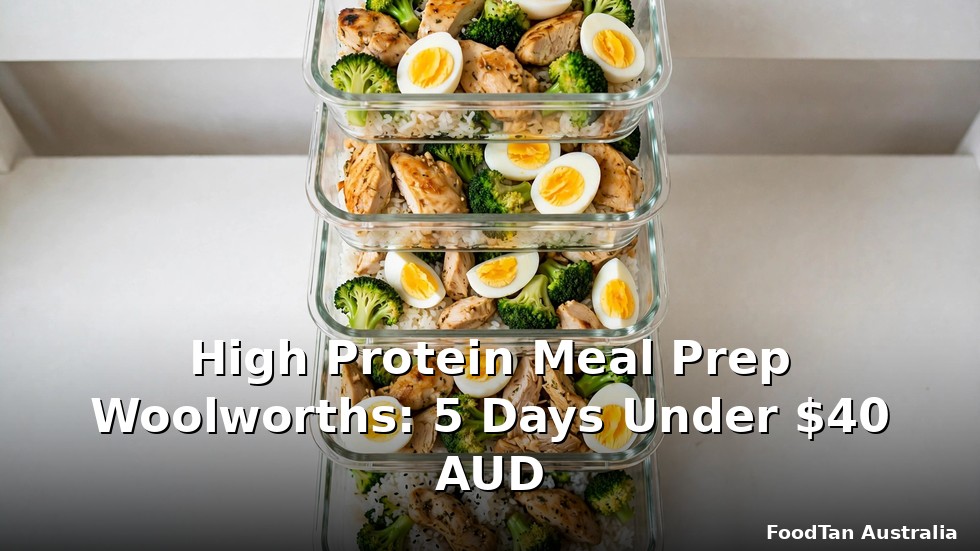
High Protein Meal Prep Woolworths: 5 Days Under $40 AUD