
Sheet Pan Chicken Thighs Meal Prep: Cheap Sweet Potato Trays for the Week
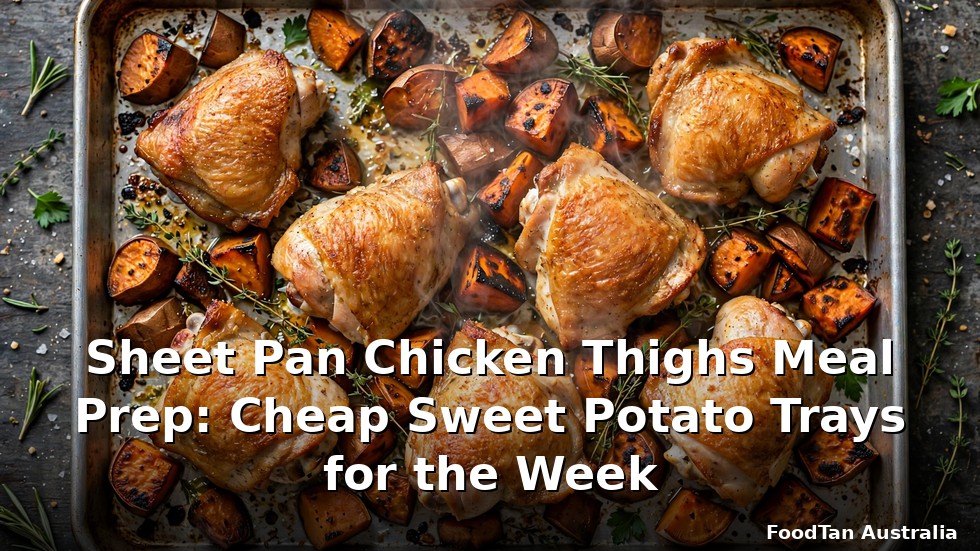
If there’s one recipe that proves meal prep doesn’t have to be complicated to be brilliant, it’s this one. Chicken thighs and sweet potato, chopped up, tossed in oil and spices, roasted on a single tray until the edges caramelise and the chicken goes crispy. That’s the whole technique. This sheet pan chicken thighs meal prep feeds you for days, costs bugger-all, and asks roughly fifteen minutes of actual effort from you.
Chicken thighs are the unsung hero of budget cooking in Australia. They’re consistently cheaper than breast — often half the price per kilo — they’re harder to overcook, and they actually taste like something. Sweet potato is the perfect partner: cheap year-round, filling, and it roasts into those crispy-edged, soft-centred chunks that make the whole tray smell incredible.
One tray makes four generous portions. Scale it to two trays and you’ve got lunches sorted for the better part of a fortnight (freeze half — they freeze beautifully). Let’s get into the method.
Key Takeaways
- Thighs beat breast for meal prep. Cheaper per kilo, juicier after reheating, and far more forgiving if you overcook them slightly.
- One tray, four meals. Roughly 15 minutes of hands-on time produces four generous portions at an estimated $3–$4 per serve.
- Cut everything the same size. Uniform 3cm chunks of sweet potato cook evenly and finish at the same time as the chicken — no burnt bits, no raw centres.
- Don’t crowd the tray. The single biggest sheet pan mistake. Spread everything in one layer with breathing room or it steams instead of roasting.
- It freezes brilliantly. Portion into containers, cool properly, and freeze for up to a few months for best quality.
Why This Combo Works So Well
Great meal prep recipes share three traits: cheap ingredients, minimal active time, and food that reheats well. Chicken thighs and sweet potato nail all three, which is why this tray shows up in my kitchen at least twice a month.
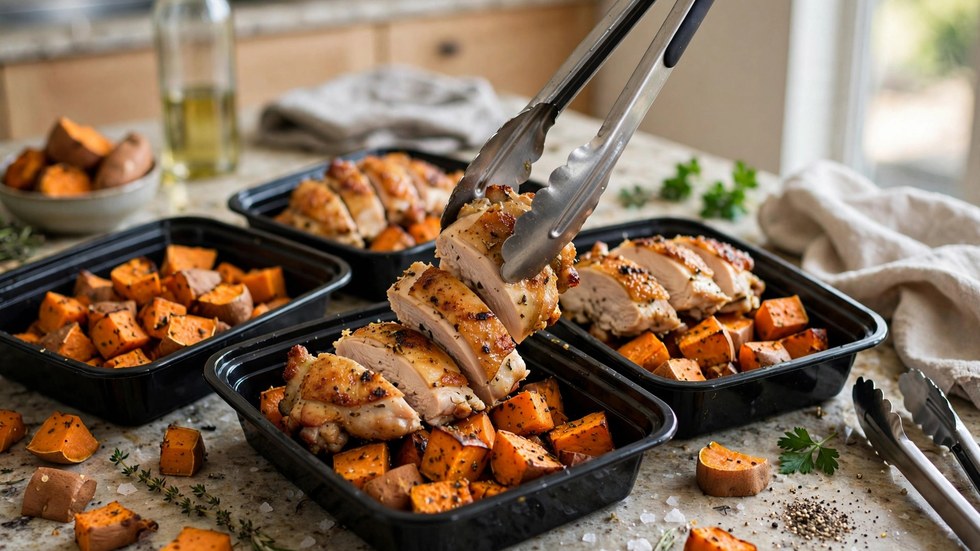
On price: chicken thighs in Australia typically run somewhere around $8–$11 per kilo depending on the store, whether they’re skin-on, and what’s on special (prices are estimates and bounce around with catalogues). Sweet potato sits around $3–$4 per kilo most of the year. A tray using 1kg of thighs and 800g of sweet potato feeds four adults generously for roughly $13–$16 in protein and veg — before you add a grain or greens to stretch it further.
On effort: the active work is chopping and tossing. The oven does the rest. There’s no searing, no sauce to babysit, no multi-pot juggling. If you can chop a vegetable and turn on an oven, you can make this.
On reheating: this is where thighs earn their keep. Chicken breast dries out when reheated — it’s lean, and there’s no fat to protect it. Thighs have enough fat and connective tissue to stay juicy through a microwave reheat on Wednesday. Sweet potato reheats beautifully too, especially if you give it a few minutes in a hot oven or air fryer to re-crisp the edges.
Sheet Pan Chicken Thighs Meal Prep: The Master Method
Makes 4 generous portions. Active time: 15 minutes. Oven time: 35–40 minutes.
Ingredients
- 1kg chicken thighs (bone-in or boneless, skin-on or off — whatever’s cheapest)
- 800g sweet potato (about 2 medium), peeled and cut into 3cm chunks
- 1 red onion, cut into wedges
- 3 tablespoons olive oil
- 2 teaspoons smoked paprika
- 1 teaspoon garlic powder
- 1 teaspoon ground cumin
- Salt and cracked pepper, generously
- Optional: 1 teaspoon dried oregano or thyme
Method
- Heat the oven to 200°C (180°C fan-forced). Line your largest tray with baking paper — it saves scrubbing later and stops the sweet potato sugars welding themselves to the metal.
- Prep the veg first. Cut the sweet potato into even 3cm chunks. Too small and they burn before the chicken’s done; too big and they’re still hard in the middle. Toss them with half the oil, half the spices, and a good pinch of salt, then spread on the tray.
- Season the chicken. Pat the thighs dry with paper towel — this is the difference between crispy skin and steamy skin. Rub with the remaining oil and spices, salt generously.
- Arrange with space. Nestle the thighs among the sweet potato in a single layer. Nothing should be touching its neighbour. If it doesn’t all fit comfortably, use two trays — crowding is the enemy of crispiness.
- Roast 35–40 minutes. Turn the sweet potato chunks once halfway through. The chicken is done when the juices run clear and the skin is golden and crisp. If you have a meat thermometer, you’re looking for the juices to run clear and the meat to be steaming hot throughout.
- Rest, then portion. Rest the chicken for 5–10 minutes — it finishes cooking gently and the juices redistribute. Then slice or shred the meat, divide among four containers with the sweet potato and onion, and refrigerate once cooled.
The science-free version of why this works
High heat plus space equals caramelisation — the sweet potato’s natural sugars brown and crisp at the edges while the inside goes fluffy. The chicken fat renders out and bastes everything around it, which is why the onion wedges that cook underneath a thigh taste like the best thing on the tray. Patting the chicken dry matters because moisture is the enemy of browning; wet skin steams, dry skin crisps. That’s the whole secret. No fancy technique required.
Five Flavour Variations (Same Tray, Different Personality)
The base method never changes — only the seasoning. This is how you eat the same cheap tray for weeks without getting bored:
- Lemon & herb: Swap the spices for lemon zest, dried oregano, garlic powder and extra olive oil. Squeeze fresh lemon over after roasting.
- Smoky BBQ: Smoked paprika, brown sugar (a teaspoon), garlic powder, onion powder. Brush with a little BBQ sauce in the last 10 minutes.
- Japanese-inspired: Toss everything in a mix of soy sauce, sesame oil, grated ginger and a touch of honey instead of the dry spices. Sprinkle with sesame seeds after roasting.
- Moroccan: Cumin, coriander, cinnamon (just a pinch), turmeric and a little honey. Serve with yoghurt and fresh coriander.
- Peri peri style: Chilli flakes or peri peri seasoning, smoked paprika, garlic, lemon juice and oil. Not traditional, but the flavour profile is spot on for the name.
Each variation costs essentially the same — you’re just raiding the spice drawer differently. Buy spices from Aldi or the international aisle at Coles and Woolies, where they’re often half the price of the big-brand jars.
Stretching It Further: Grains and Greens
The tray alone is a complete meal, but adding a base stretches four portions into six and drops the cost per serve even further:
- Rice: Cook a big batch while the tray roasts. Brown rice holds up better over several days than white, but either works. Portion 3/4 cup cooked rice per container.
- Couscous: The fastest option — pour boiling water over it, cover for five minutes, fluff. Lemon and herb couscous with the lemon chicken variation is a top-tier combo.
- Quinoa: Pricier, but great protein. Cook in bulk and freeze portions.
- Greens: A handful of baby spinach or rocket added fresh at serving time (not prepped days ahead — it wilts). Or roast a tray of broccoli or beans alongside the chicken for a one-tray veg situation.
- Slaw: Shredded cabbage and carrot with a simple vinegar dressing keeps for days and adds crunch that reheated trays desperately need.
Storage, Reheating and Food Safety
Cool the portions reasonably quickly — don’t leave the tray sitting on the stove for hours, especially in warmer months. Divide into containers, refrigerate, and eat within 3–4 days. For longer storage, freeze portions for up to a few months for best quality; thaw overnight in the fridge.
Reheating options, ranked:
- Oven or air fryer (best): 180°C for 10–12 minutes re-crisps the sweet potato edges and the chicken skin. Worth it when you have the time.
- Microwave (fastest): 2–3 minutes, stirring the veg halfway. Sprinkle a few drops of water over the sweet potato first to stop it drying out. The skin won’t be crispy, but the flavour is all there.
- Pan (good middle ground): A hot frypan with a tiny bit of oil crisps everything back up in about 5 minutes. Great for the chicken pieces especially.
Reheat until steaming hot all the way through, and only reheat what you’re going to eat — repeated reheating dries the chicken out and isn’t great practice.
The Cost Breakdown
Here’s what the master tray costs, using typical Australian supermarket prices. Remember these are estimates — catalogue specials can cut the chicken cost dramatically, so this is a full-price scenario:
| Ingredient | Amount | Est. price (AUD) |
|---|---|---|
| Chicken thighs | 1kg | $9.00 |
| Sweet potato | 800g | $2.80 |
| Red onion | 1 large | $0.80 |
| Olive oil | 3 tbsp | $0.90 |
| Spices, salt, pepper | Pantry | $0.50 |
| Baking paper | 1 sheet | $0.20 |
| Total (4 portions) | $14.20 | |
| Per serve | $3.55 |
Add rice and you’re looking at roughly $4 per serve for a complete, filling meal. Buy the thighs on special — they regularly drop to half price — and the per-serve cost falls under $3. That’s dinner for less than a coffee, with leftovers that actually taste good on day three.
Run your own numbers with different proteins or add-ins using the calculator:
Australian Meal Prep & Macro Estimator
Pop in your costs in $ AUD and get per-portion cost, macros and storage guidance.
Troubleshooting: When the Tray Goes Wrong
Sheet pan cooking is forgiving, but a few things can go sideways. Here’s how to fix or avoid the common ones:
- Soggy instead of crispy: The tray was crowded, or the oven wasn’t fully preheated. Give everything space and make sure the oven is genuinely at temperature before the tray goes in. An oven thermometer is a cheap fix if yours runs cool.
- Burnt sweet potato, raw chicken: The chunks were too small or the thighs too large. Keep sweet potato at 3cm and choose thighs of similar size. If your thighs are massive, give the sweet potato a 10-minute head start.
- Bland despite seasoning: You under-salted. Sweet potato needs generous salt — more than feels sensible. Season the veg and the chicken separately, not just one or the other.
- Stuck to the tray: Always use baking paper. The sugars in sweet potato are basically glue once caramelised. Future you will thank present you.
- Dry chicken: You probably used breast, or overcooked the thighs. Thighs are forgiving but not immortal — check at 35 minutes. And rest the meat before slicing.
Making It a Weekly Habit
The real power of this recipe isn’t any single tray — it’s how easily it becomes a system. Sunday arvo: two trays in the oven (rotate them halfway), rice cooker going, containers lined up. An hour later you’ve got eight portions for around $25–$30. That’s most of a week’s dinners or lunches handled while you did something else.
Freeze half if eight portions is too many for the fridge timeline. Label with the flavour variation and date. Future you, staring into the freezer on a Wednesday night with zero motivation to cook, will be genuinely grateful.
Start with the master method this week. Next week, try the Japanese-inspired variation. By week three you’ll have strong opinions about which spice blend is best, and that’s when you know the habit has stuck.
You May Also Like
10 Cheap High Protein Lunch Bowls Australia Under $3.50 AUD Per Portion
High Fiber Batch Cooking Australia: Beans and Greens for Better Digestion